Deutsche Version dieses Postings
In contrast to
Switzerland and
Great Britain, my knowledge about interlockings in Scandinavia is almost zero—therefore, I will not be able to explain too much about the frames and signals in this and upcoming postings. However, I will try to add links to websites that contain more information.
Back to our journey: A short trip brought us from
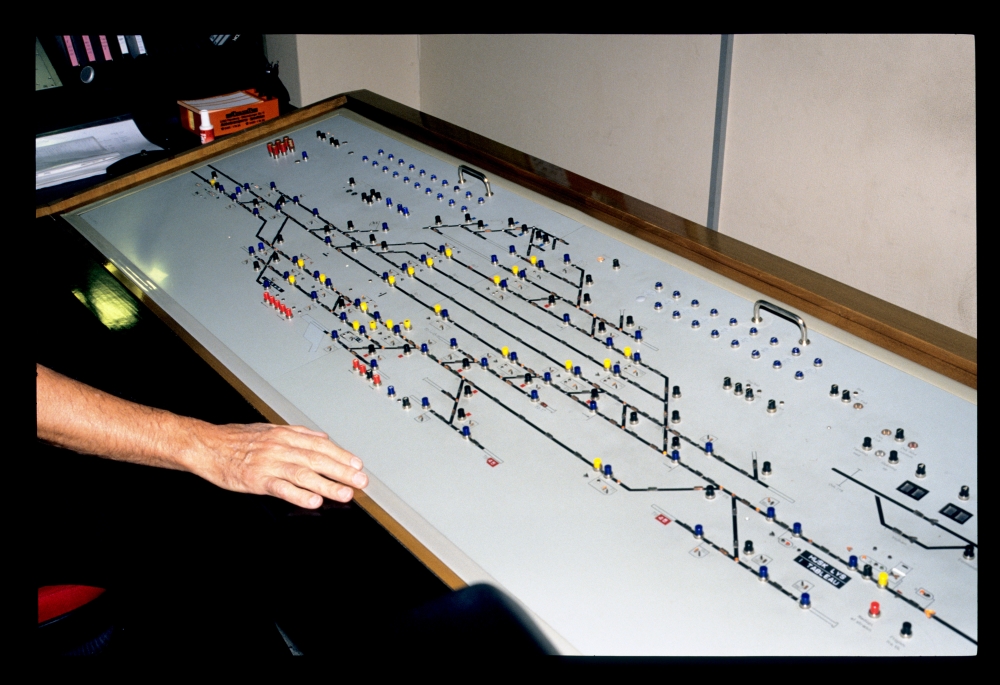
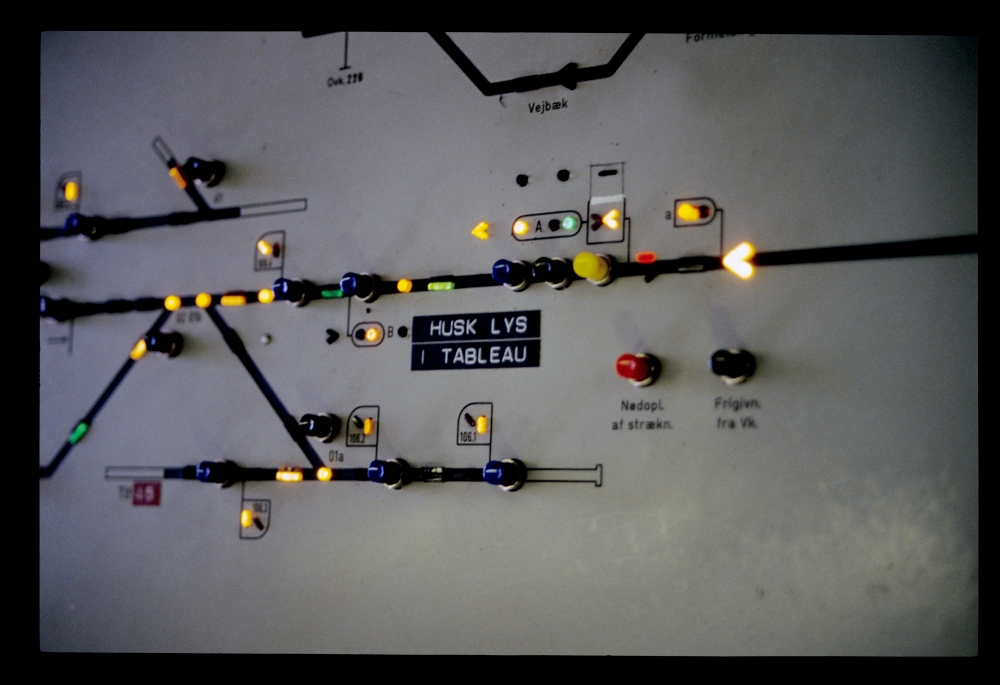
Flensburg to Padborg in Denmark, where I headed straight for the traffic bureau. Here is the interlocking panel I was allowed to photograph:
Interlocking panel, Padborg, 15.7.1989
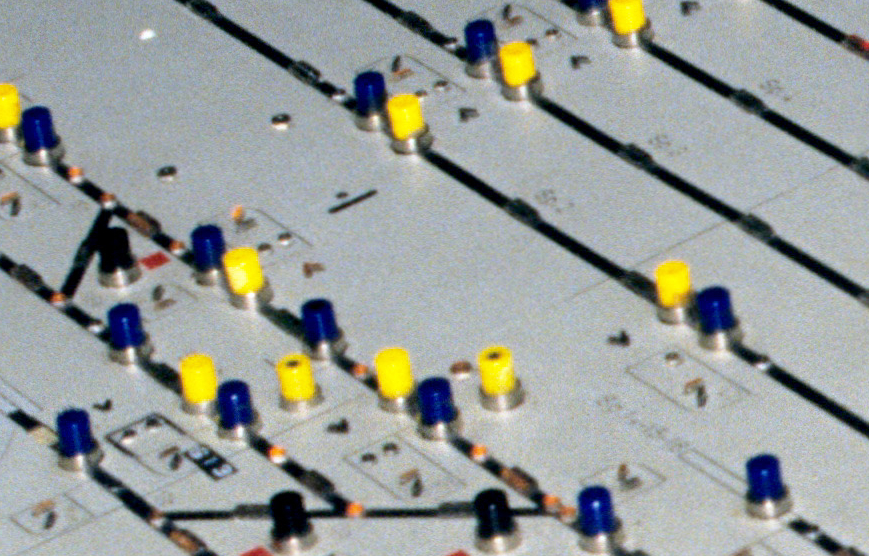
One can see that Padborg's station building is situated between the tracks from the following enlargement: The line and dot roughly in the center show the location of the interlocking in the traffic bureau in the station building:
Interlocking panel, Padborg, 15.7.1989
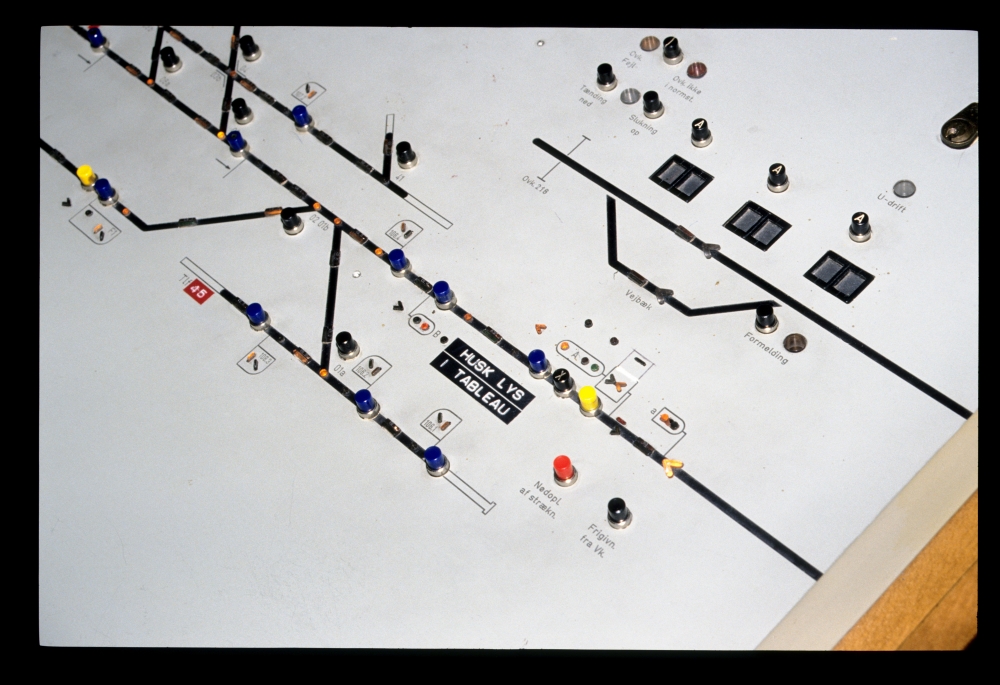
In contrast to Germany and Austria, I have not seen any interlocking panels on our trip that were built from small "domino" pieces. I do not know why the Scandinavian railways (or their interlocking providers) used panels that would have to be replaced completely when the station layout changed. The following picture shows the rightmost part of the panel with an incoming route from Tinglev, the next station to the north:
Interlocking panel, Padborg, 15.7.1989
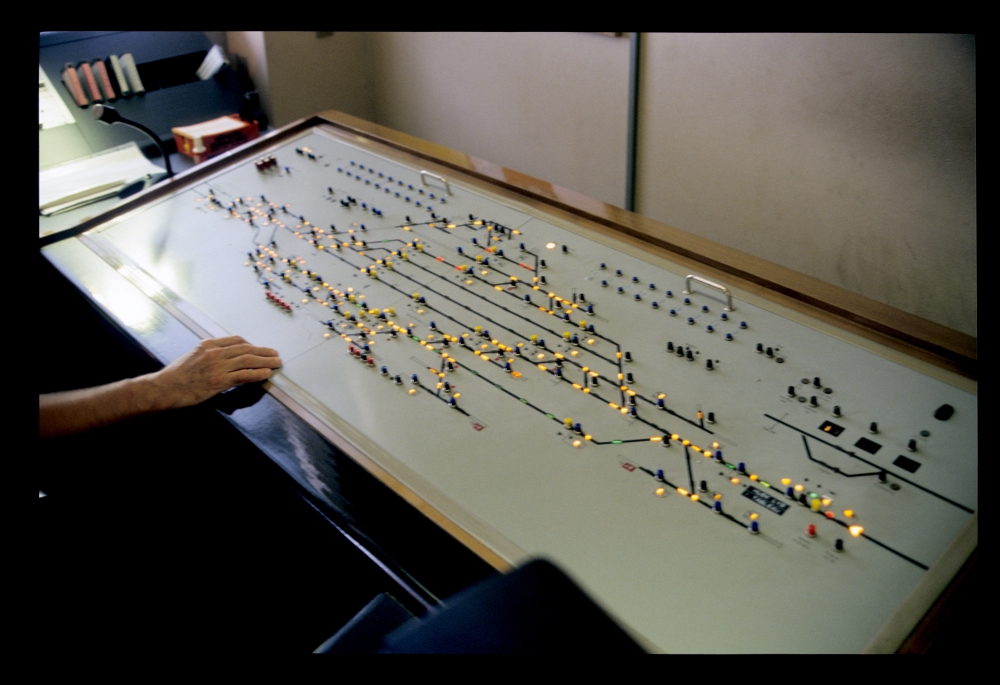
The following picture got blurred because I did use the flash—however, one can see the various illuminations better here. The lowermost track is marked with green lights, which certainly show that it is part of a locked route. Some tracks farther back show red lamps, which should mean that they are occupied:
Interlocking panel, Padborg, 15.7.1989
And here is another picture of the northern station throat with the incoming route. One can see that the two sets of points connecting two parallel tracks share the same number, suffixed with a and b (01a and 01b, in this case). This is more in line with British custom—in Germany, a and b are used for the blade groups of double slip switches, and in Austria, points are designated by numbers only. Moreover, one can see that also shunting signals are cleared along a train route—this is typical of most railways, but not so in Austria:
Interlocking panel, Padborg, 15.7.1989
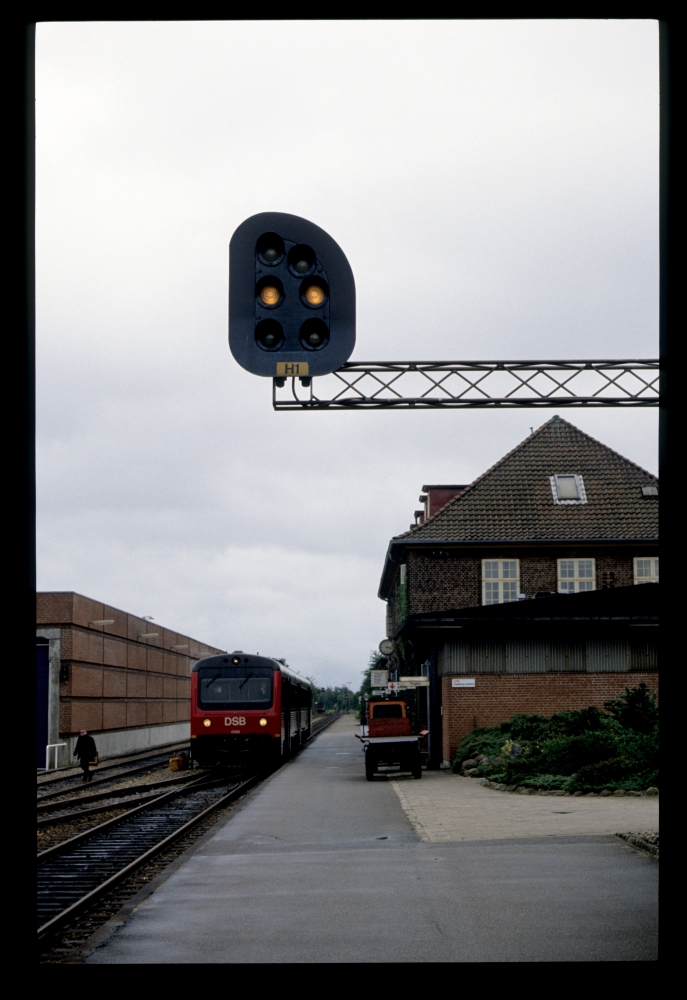
Here is a "perronudkørselssignal" (according to
lundsten.dk), which can be translated as "platform starting signal":
Signal H1, DSB MR 4089, Padborg, 15.7.1989
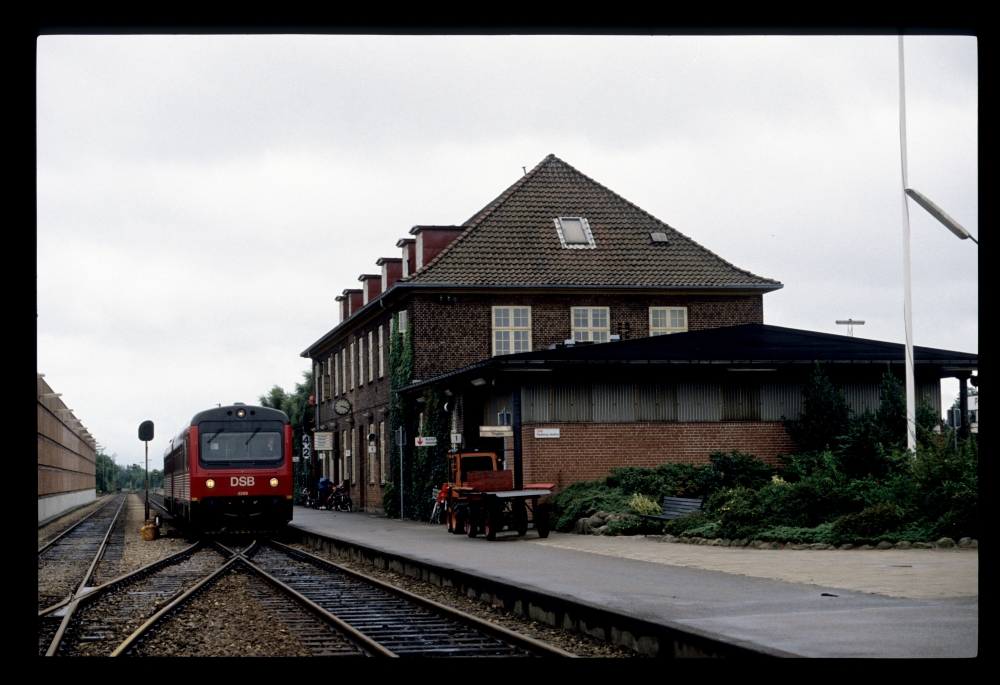
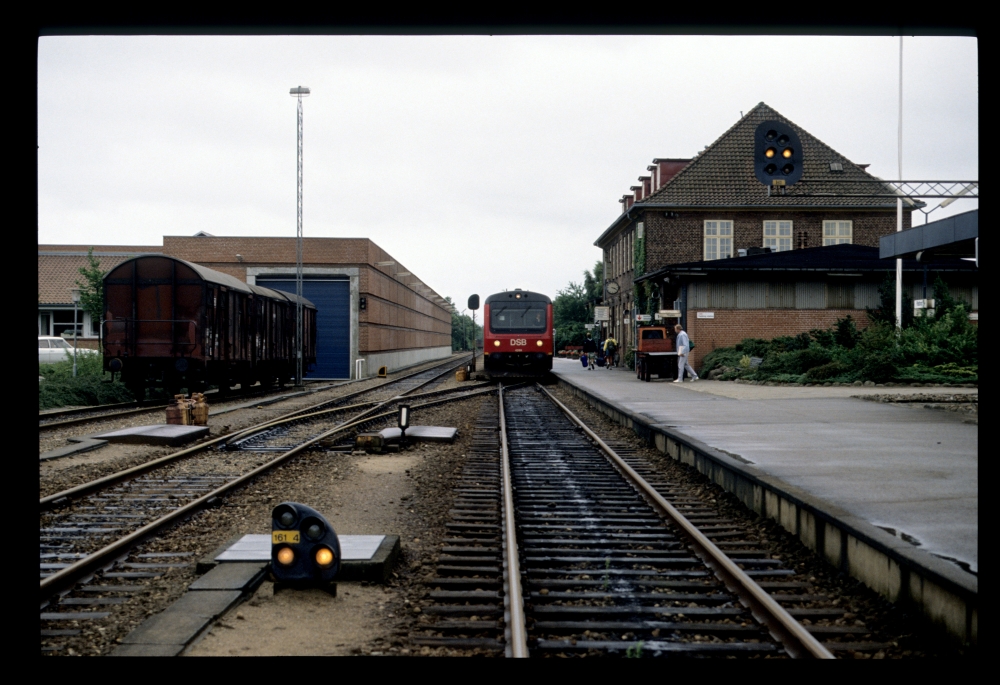
Our train to Tinglev is waiting here in front of the station building:
Station building, Padborg, 15.7.1989
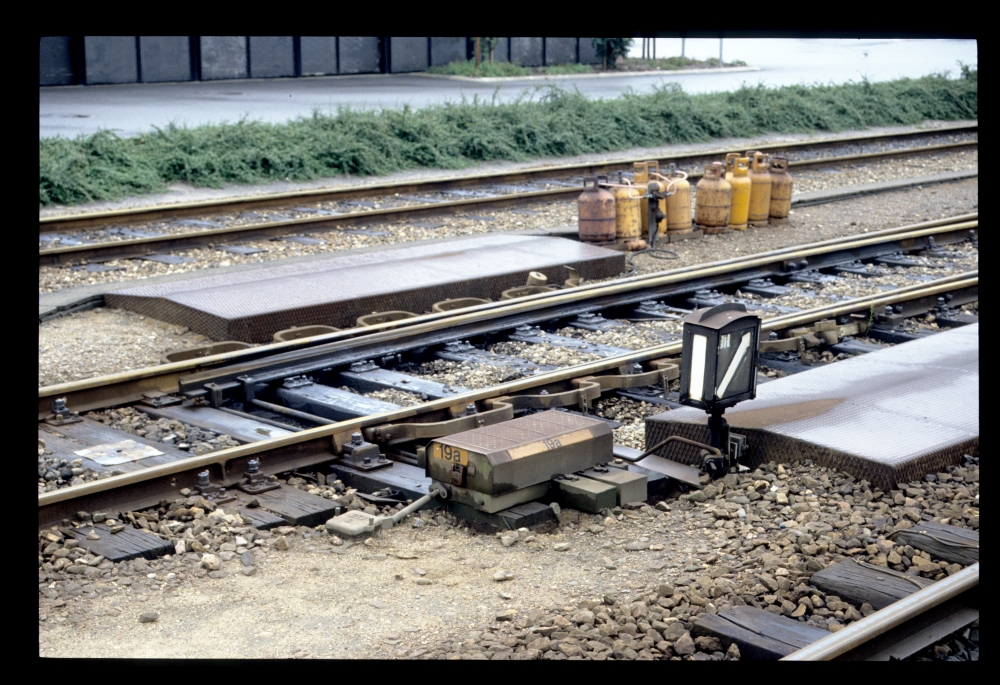
The housing of points machine no. 19a looks like the widely used Siemens type S700, but the blades are connected directly to the points rodding, so that this machine uses internal blade locks, in contrast to the typical external claw locks used in Germany and Austria. This can also be deducted from the fact that the motor is securely mounted on lengthened sleepers (whereas Austrian and German points machines are mounted on smaller—some might say flimsy—brackets). The gas cylinders of the points heating are simply put on flat sheet metal pieces (in contrast to Austria, where such cylinders were put into their own cages):
Points 19a, Padborg, 15.7.1989
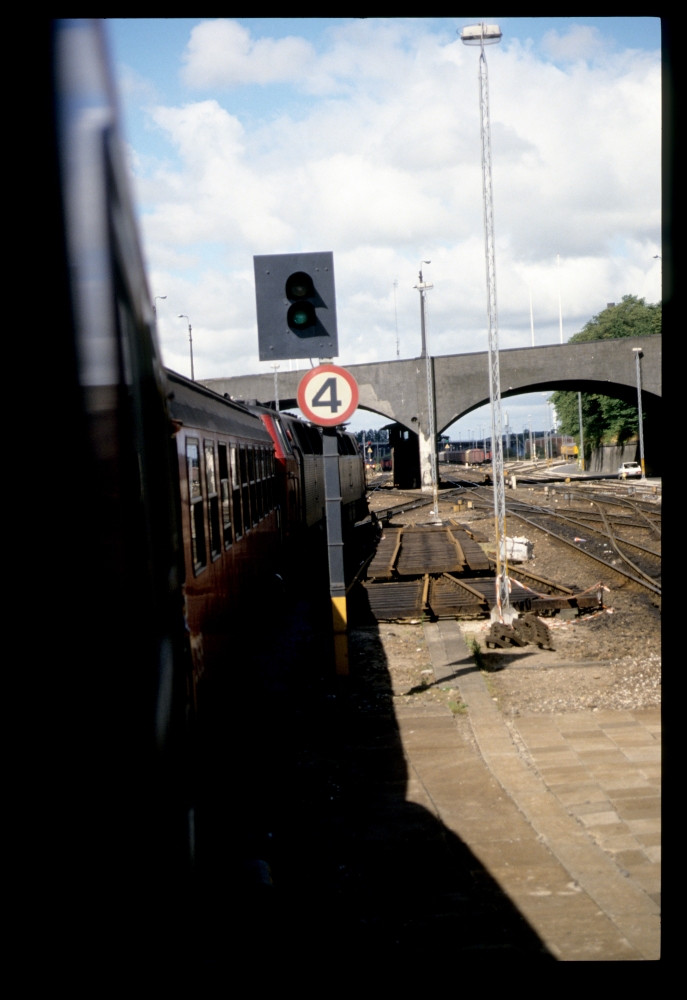
Here is dwarf signal ("dværgsignal") 161.4, just in front of points 19a:
Dwarf signal 161.4 and points 19a, DSB MR 4089, Padborg, 15.7.1989
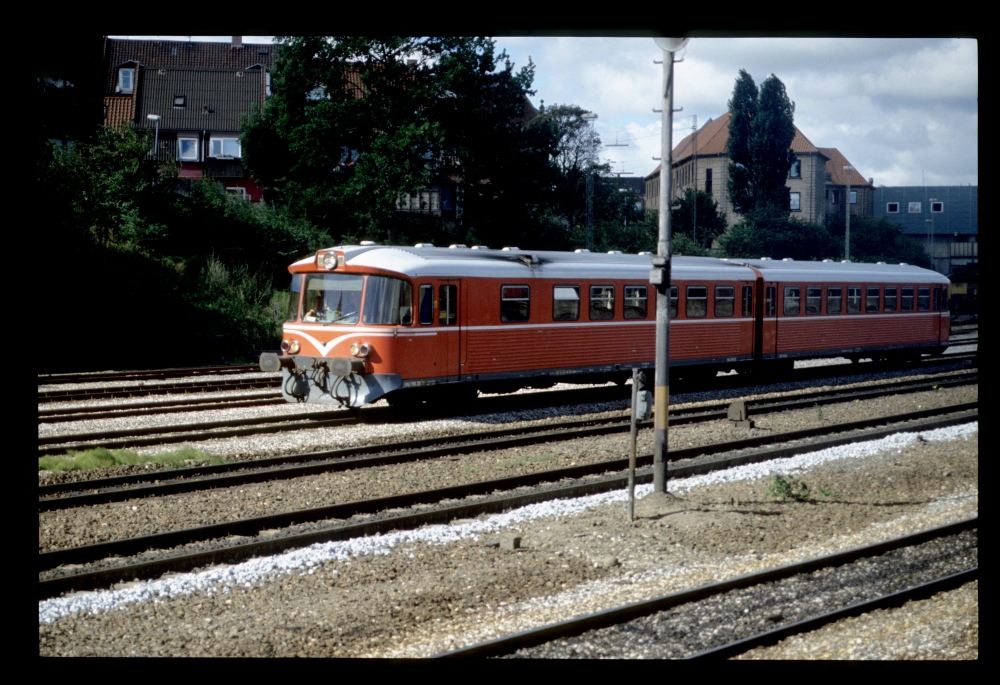
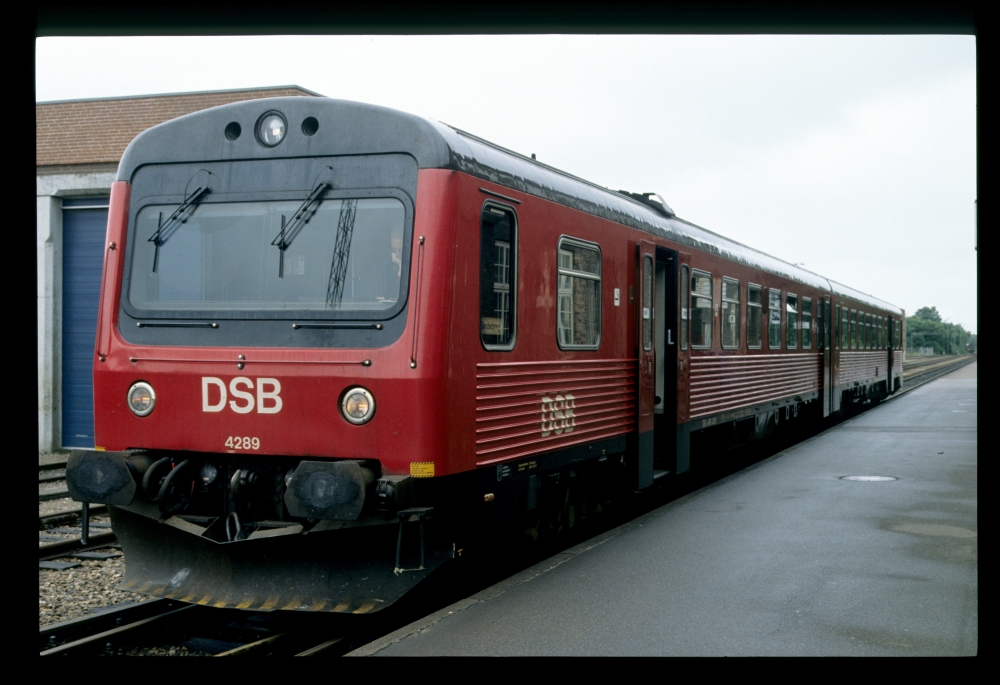
Motor car 4289 of DSB class MR+MRD:
DSB MRD 4289, Padborg, 15.7.1989
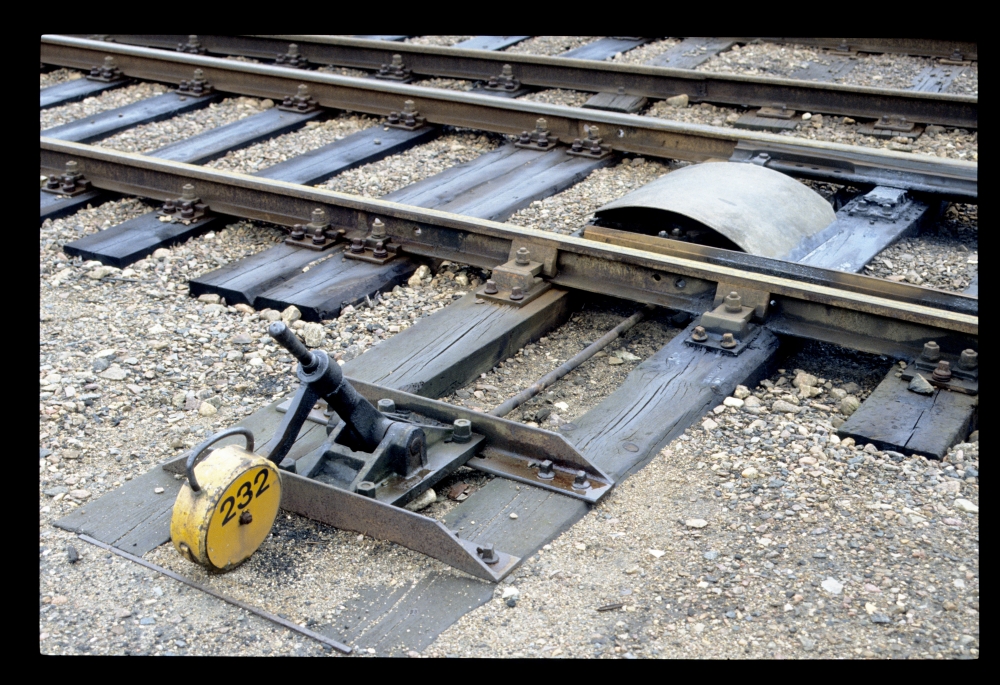
Somewhere near the station building, I took this picture of locally operated points 232, with a swinging weight, as they are used in Austria and
Italy:
Points 232, Padborg, 15.7.1989
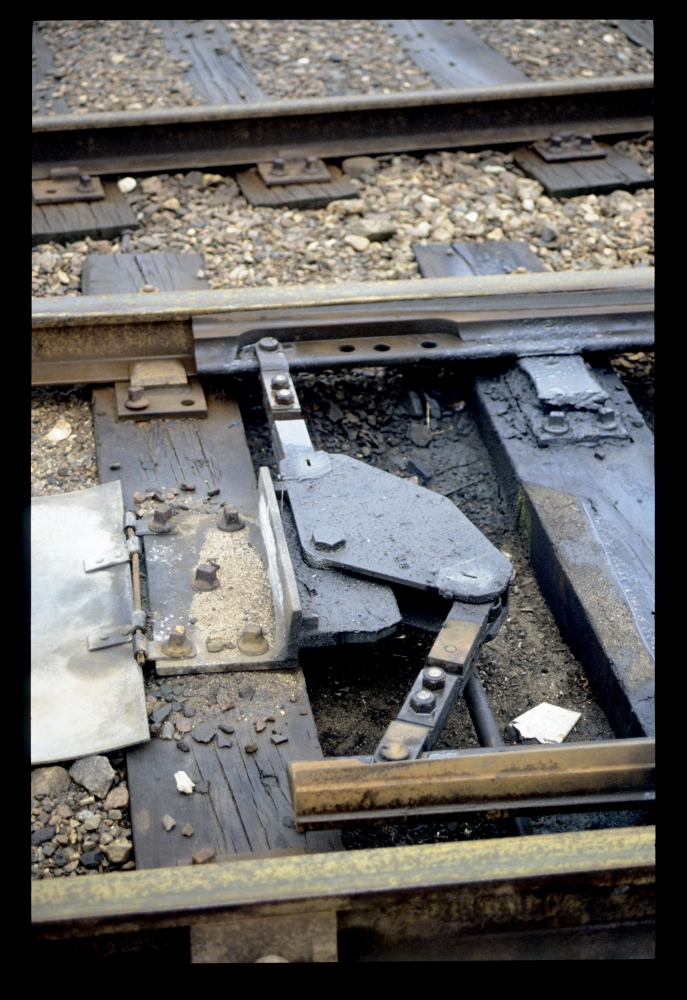
I even opened (without having asked, I assume) the cover of the blade locking mechanism—a typical center lock with an elbow lever to press the blade against the stock rail:
Points 232, Padborg, 15.7.1989
And that's it from Padborg.