Friday, September 15, 2017

Switzerland 1988: Electro-mechanical blend at Kreuzlingen

Deutsche Version dieses Postings

Here are a few pictures from Kreuzlingen. The next posting will have many more details on this interesting station, explained by Hanspeter Thöni.

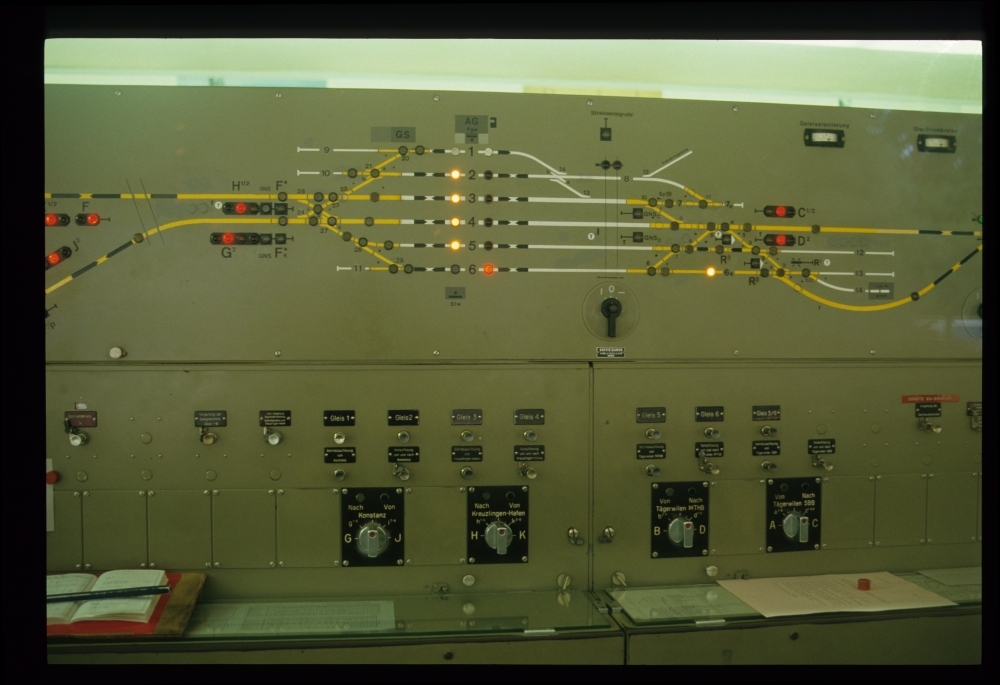
At Kreuzlingen, the train director was not as friendly as elsewhere, and therefore I took only one photo at the train bureau:

Command frame, train bureau, Kreuzlingen, 22.8.1988

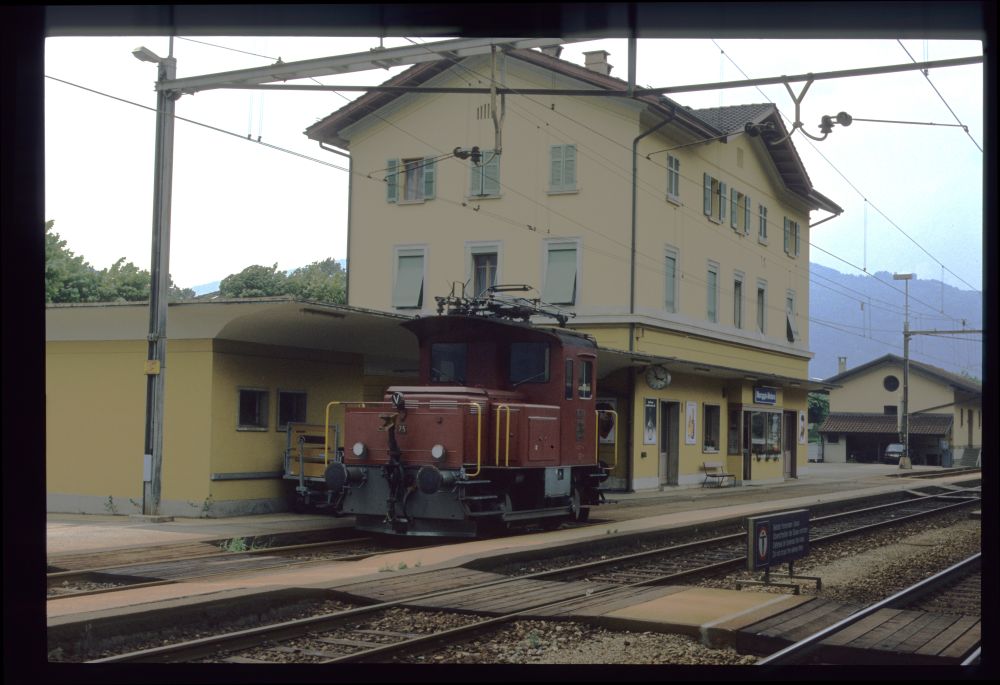
This "tractor" was shunting at the station:

TeIV 77, Kreuzlingen, 22.8.1988

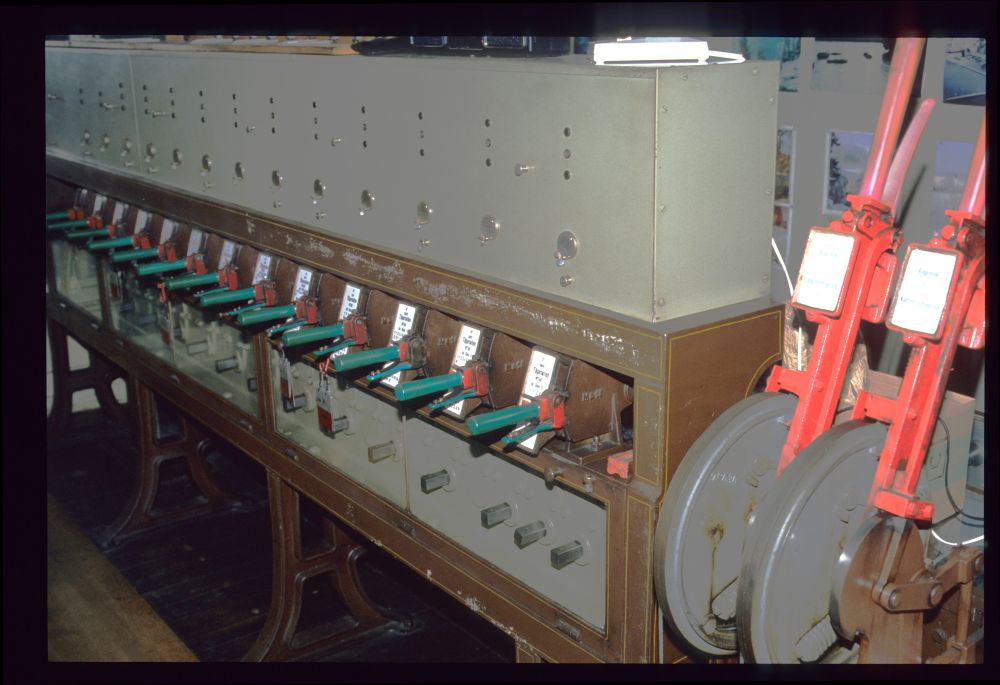
The signal box still had a mechanical frame, with all the points controlled by mechanical levers—about half of them with double-wire lines, the other half with rodding. The signals, on the other hand, had been converted to light signals, with one exception.

Track panel and points levers, Kreuzlingen, 22.8.1988

The connection to the command frame in the train bureau did not use block instruments, rather standard lever locks were used which locked the corresponding route levers. The routes to be locked and cleared were indicated by small lamps:

Route levers, Kreuzlingen, 22.8.1988

Here are a few points levers. At least the two reversed (downward pointing) levers are connected to their points with rodding:

Points levers, Kreuzlingen, 22.8.1988

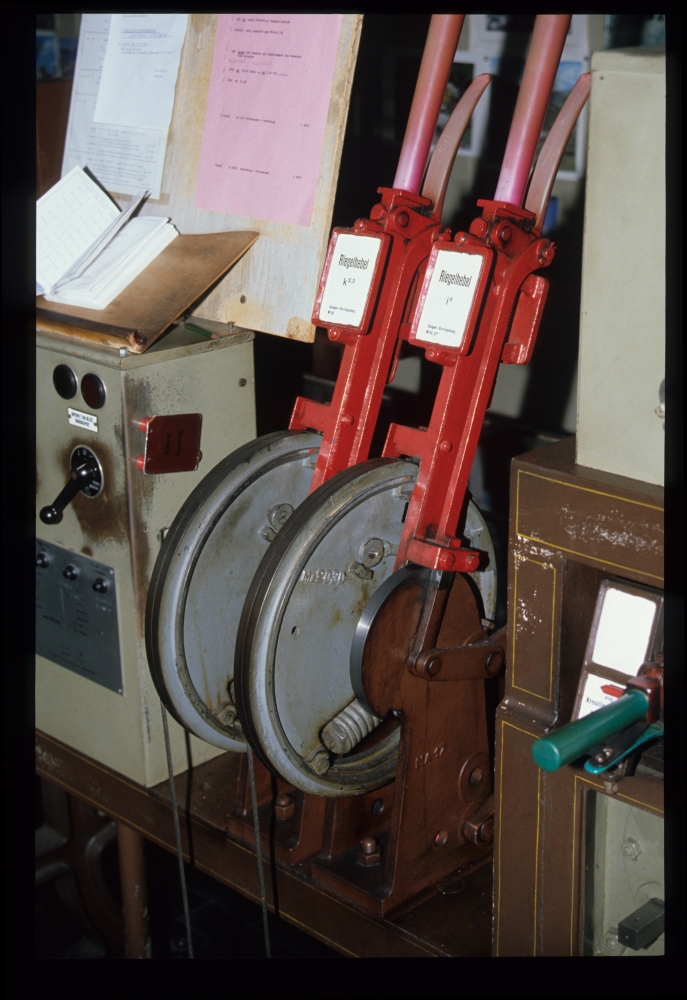
Near the route levers, there were these two FPL levers:

FPL levers, Kreuzlingen, 22.8.1988

In my first attempt to take a photo of the signal box, three wagons wanted to pose before and hide it:

Signal box (not really), Kreuzlingen, 22.8.1988

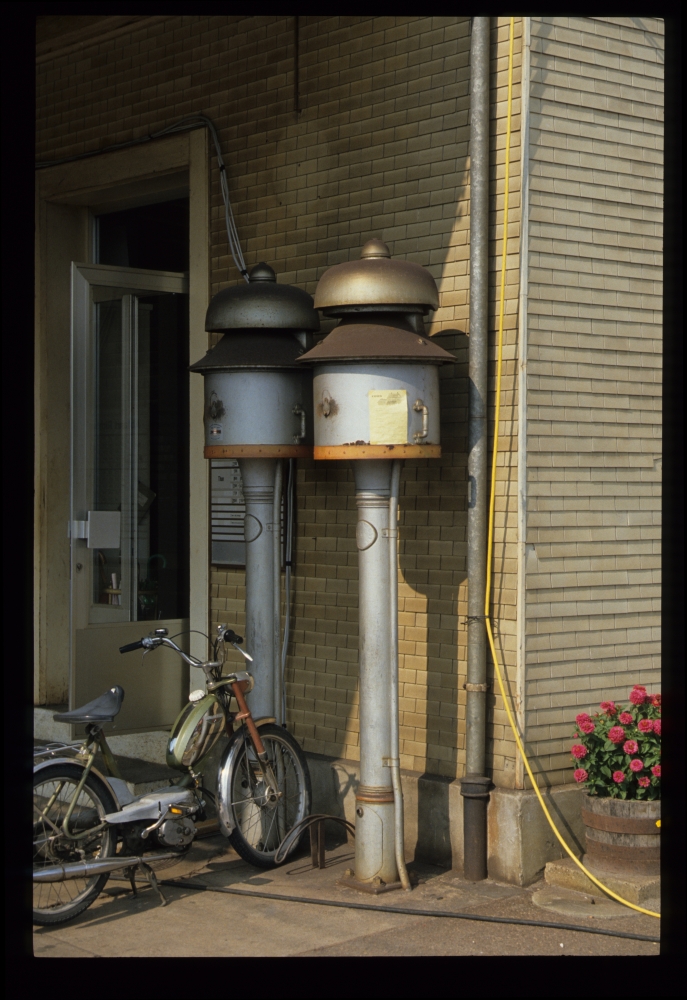
In the next photo, I could catch the whole box, including all the bells for the four lines leaving Kreuzlingen:

Signal box, Kreuzlingen, 22.8.1988

Unfortunately, the following picture of the points rodding is blurred:

Points rodding, Kreuzlingen, 22.8.1988

And here is a picture of the exception mentioned above—the mechanical shunting signal R1:

Shunting signal R1, Kreuzlingen, 22.8.1988

Thursday, September 14, 2017

Switzerland 1988: A very special route locking mechanism at Cham

Deutsche Version dieses Postings

Cham (pronounced K-aam) is a small Swiss station between Rotkreuz and Zug on the line from Zug to Lucerne. In 1988, I photographed the quite interesting interlocking frame. The track arrangement of the station, which can be seen in the following picture, is quite typcial: Three main tracks (2, 3, 4) and loading track 1 directly in front of the station building, a storage track and a shunting neck, and finally an industrial spur with a separate shunting signal. All signals were colour light signals. One each side, a single common signal for all four tracks was used as an starting signal, as was common in Switzerland on many smaller stations:

Track panel, Cham, 21.8.1988

The following image shows the whole frame. In the center, there are four signal levers, which—via electrical contacts—control the two home and two starting signals. Before them, one can see the wire roll of a fifth lever labelled "Von Anschlussgleis E" ("from spur E")—obviously, this lever reverses the shunting signal. Of more interest are the points levers: As in Grenchen Süd, they are reused route levers on the left and right of the signal levers. But the most interesting feature is the route locking: It is placed highly above the lever frame, in the brown box:

Interlocking frame, Cham, 21.8.1988

The next picture shows that the route levers are actually small cranks:

Route locking, Cham, 21.8.1988

Back side of interlocking frame, Cham, 21.8.1988

The inner workings of the frame can actually be checked out today, as the frame has survived at a museum: This link and that one point to images that show the following:
  • the locking bed is now visible behind a plexiglass cover; 
  • on the left side, the repurposed route levers for the points have once more be replaced with large levers; 
  • and, above all, one can clearly see the connecting rods from the route locking box to the frame.
The website containing these images also shows that there is another similar frame which was located at Hinwil—but let me return to my own photos of Cham!

Here are the three points levers on the left side (the ones that have been retrofitted with mechanical levers), with corresponding locks on top. The downward rods go to a vertical locking bed:

Points levers, Cham, 21.8.1988

The next station's name, Rotkreuz, is written with old-fashioned "th" on these levers—near the route cranks, on the other hand, it is written with "t", so new labels may have been added there later:

Signal levers, Cham, 21.8.1988

Signal levers, Cham, 21.8.1988

Next to the mechanical frame, there stood an Integra frame with a single lever for a barrier. The main purpose of this frame was block working:

Electrical frame, Cham, 21.8.1988

Somewhere I took this photo of the controls for the overhead lines. The wall behind looks like it might be outside, on the platform. Unauthorized operation had been prevented with a metal rod, which would have to be unlocked with a square key and then moved a little bit to the side:

Switches for overhead lines, Cham, 21.8.1988

Unfortunately, the following image of the track side of the station is quite blurred—I just show it because of the small "tractor" or shunting engine which was still located at such small stations, for example to push a mail wagon on the back of a train. Here at Cham, it probably also shunted the spur mentioned above:

Station building, Cham, 21.8.1988

The image of the station building from the other side came out quite passable:

Station building, Cham, 21.8.1988

Wednesday, September 28, 2016

Switzerland 1988: Maroggia-Melano

Deutsche Version dieses Postings

The following picture of a "tractor" (a small switching locomotive) is, unfortunately, too dark:

Station, Maroggia-Melano, 20.8.1988

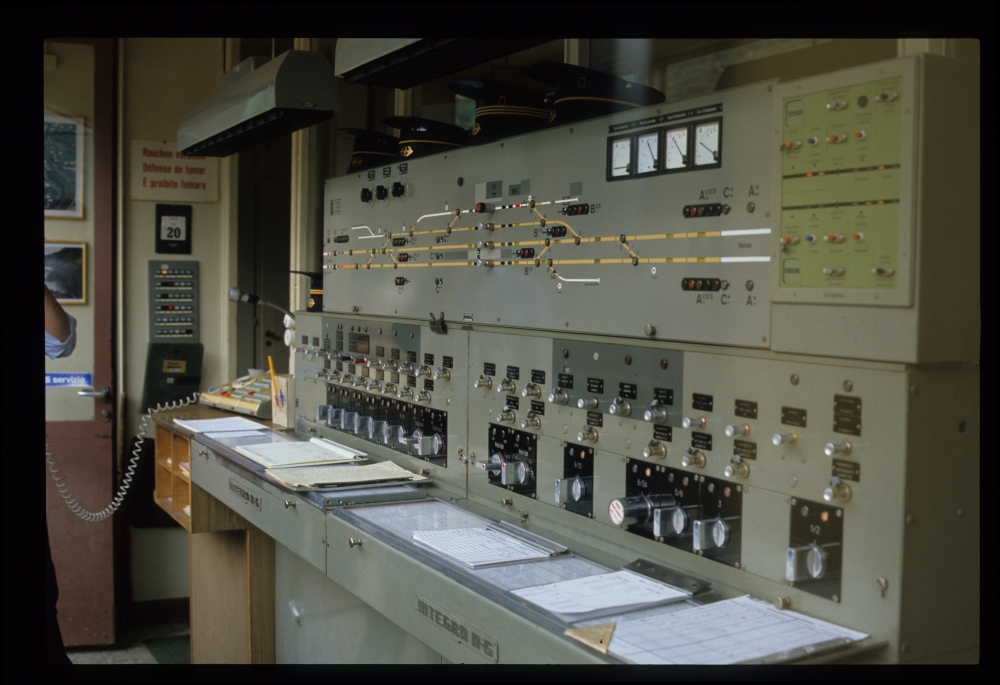
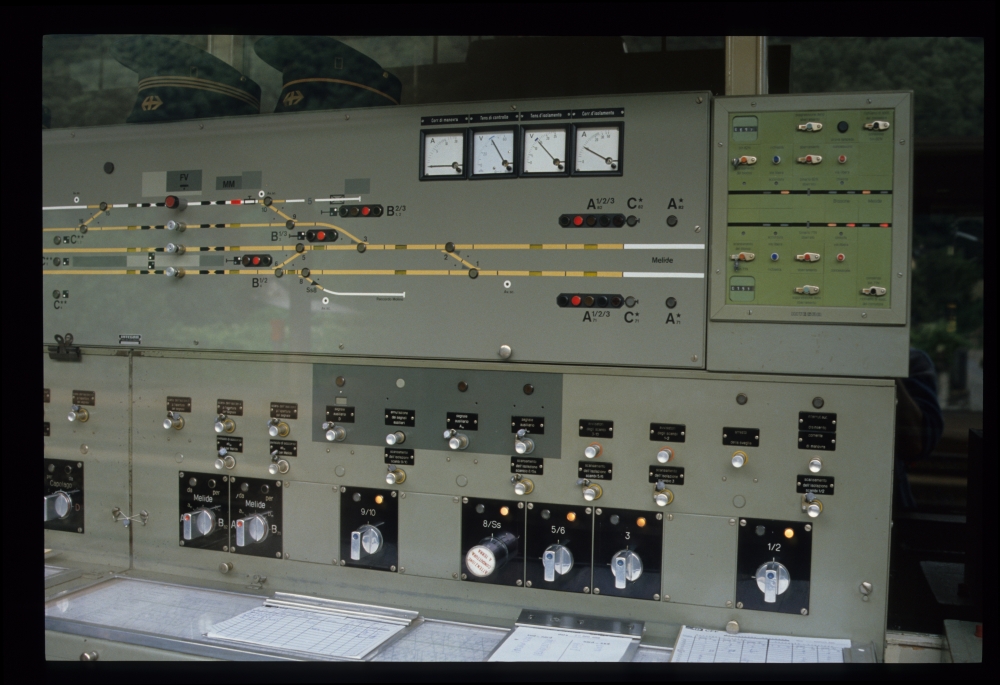
In the same station, I then took a few photos of the Integra relay interlocking frame. The line towards Melide had already been "banalized", i.e., been equipped for two-direction running on both tracks, as can be seen from the two home signals on that side. On the opposite side, from Capolago, there is only one home signal, indicating standard left-hand side running:

Interlocking frame, Maroggia-Melano, 20.8.1988

It is interesting to look at the signal designations, which finally show speed indications different from the ubiquitous 1 and 2 indications: The home signals have designations A711/2/3 and A621/2/3, meaning they can signal indication 1 ("Clear"), 2 ("Execute speed restriction 40km/h") and 3 ("Execute speed restriction 60km/h"). The starting signals are called B1,22/3 for the first two platform tracks, B31/3 and B41/2 at the running main tracks.

Hanspeter Thöni adds a number of remarks:

Enlarging the track plan shows that points 1, 2 and 3 are marked with a small 'wedge' between the track lines. This wedge indicates that these are 'points with special properties', where the diverging route can be travelled with 60km/h. This matches the signal designations given above.

The 'banalisation' on the right side can also be seen at the route switches: There are no red signal indications, because there are no longer routes on the 'wrong' track. As happened frequently, the banalisation required too much space for the switches and lamps for the line block. Therefore, a small Integra-Domino panel had been added on the right side.

Without seeing the details on the left side, it is impossible to find out which line block system was used there: Either the same one as in Grenchen Süd, or a so-called OH-block (also called Chrüzliblock). However, it is certain that it was possible to close one track and run bi-directionally on the remaining track.

The round item over the switch for points 8/Ss is an auxiliary cover to prevent accidental reversal of the points.

And, finally, the picture above with the complete interlocking frame shows, on the left (below the calendar), a panel for controlling the lamps on the platforms and in the station building. Nowadays, all these lamps are controlled remotely.


Interlocking frame, Maroggia-Melano, 20.8.1988

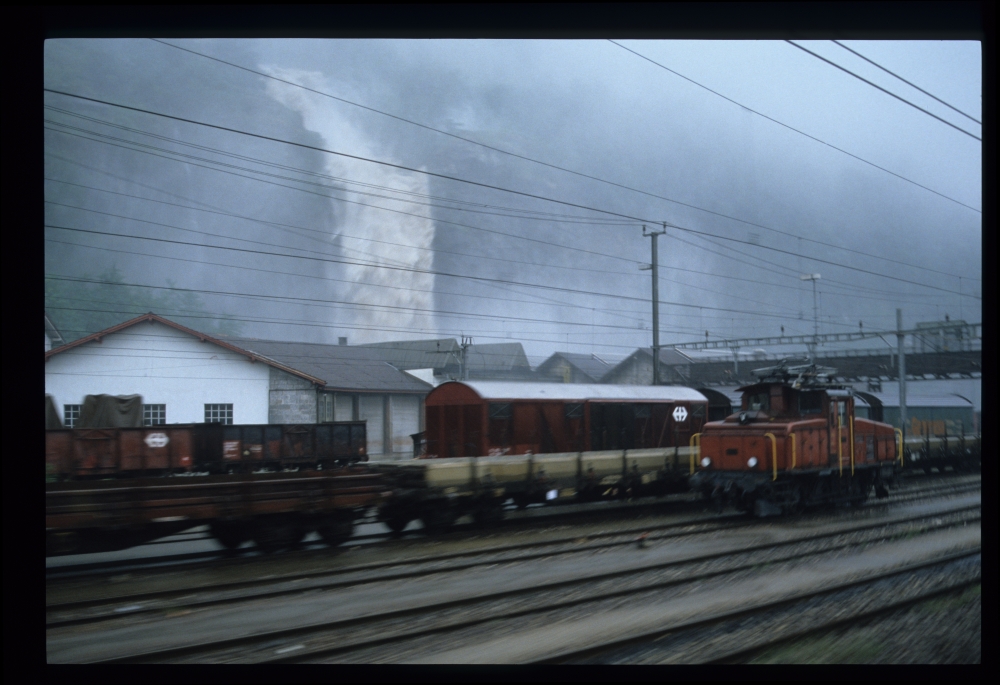
When we rode back over the Gotthard, heavy thunderstorms poured tons of water on the landscape. At (I believe) Bodio I took this picture of a huge waterfall behind the station tracks:

Falling water, Bodio?, 20.8.1988

Switzerland 1988: Lugano

Deutsche Version dieses Postings

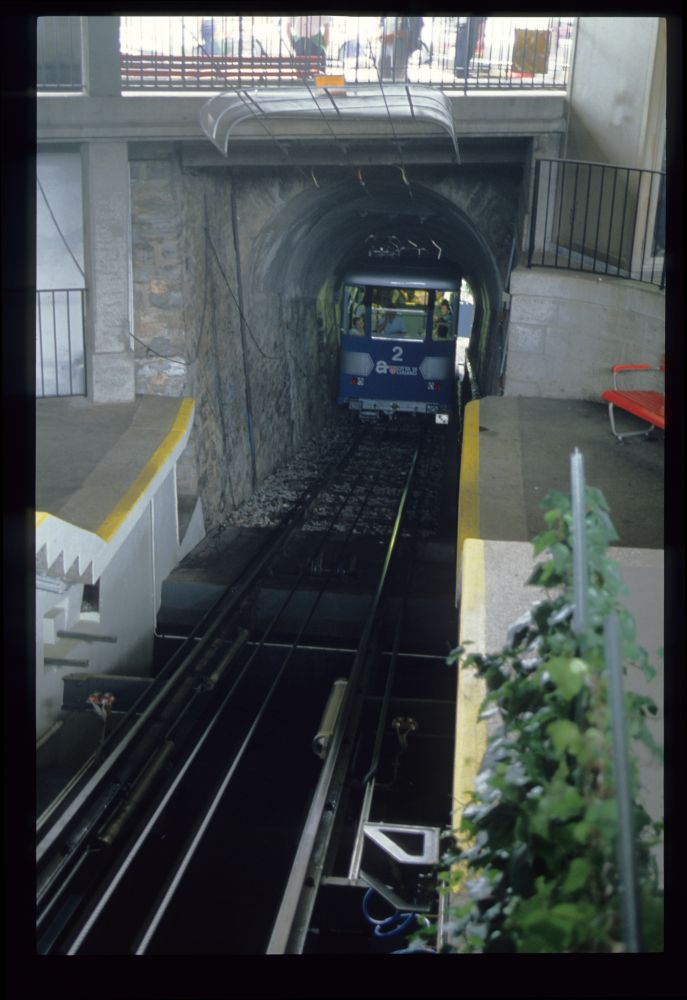
South of the Alps, in Ticino: I took only this single picture of the Lugano cable car, the heaviest travelled funicular in all of Switzerland:

Funicular, Lugano, 20.8.1988

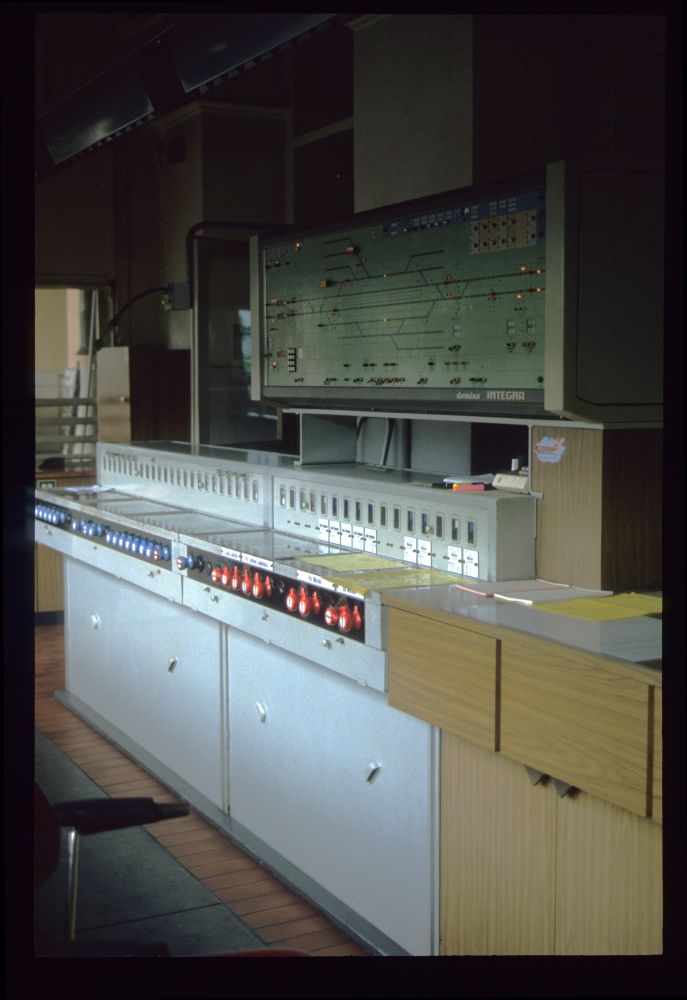
The interlocking frame was of the German type VES1912:

Interlocking frame, Lugano, 20.8.1988

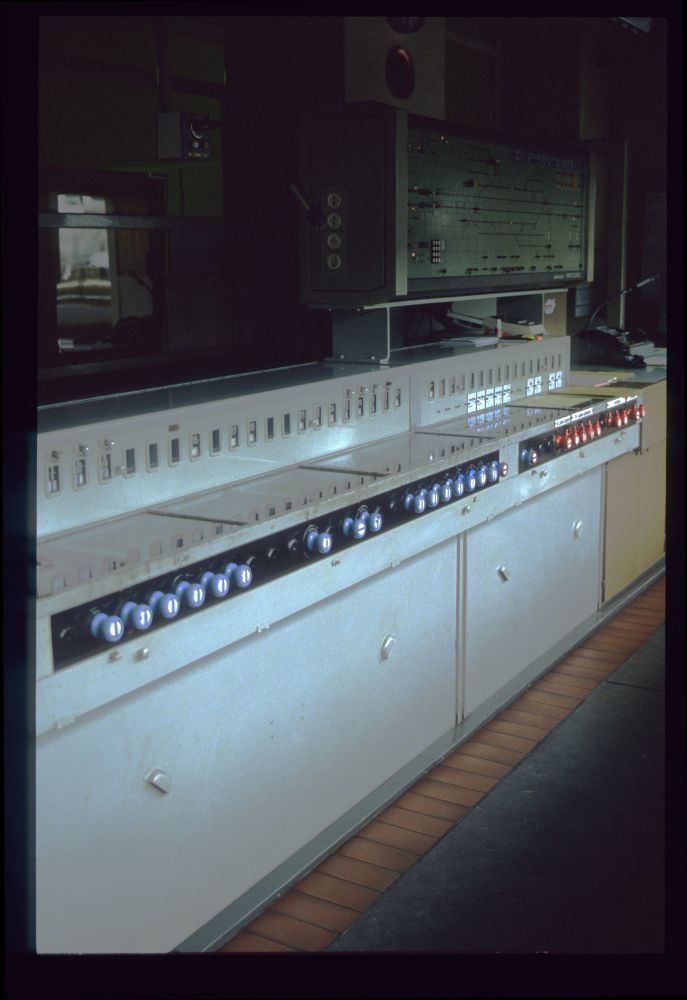
All the route switches were placed together on the right side:

Interlocking frame, traffic bureau, Lugano, 20.8.1988

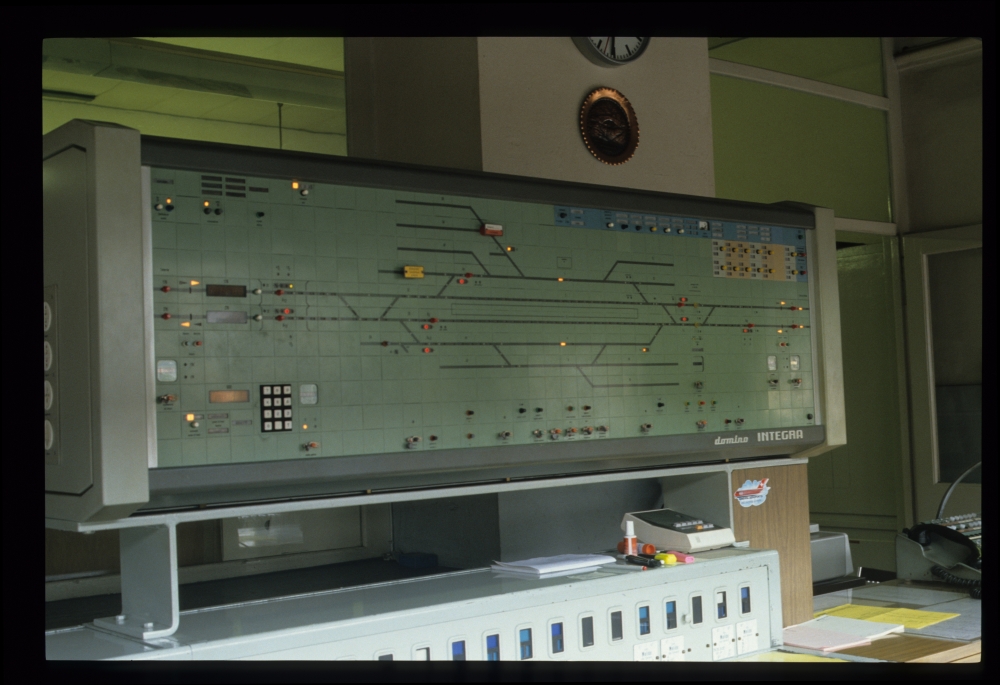
Above the electro-mechanical frame, an Integra track panel had been added in later times:

Track panel, Lugano, 20.8.1988

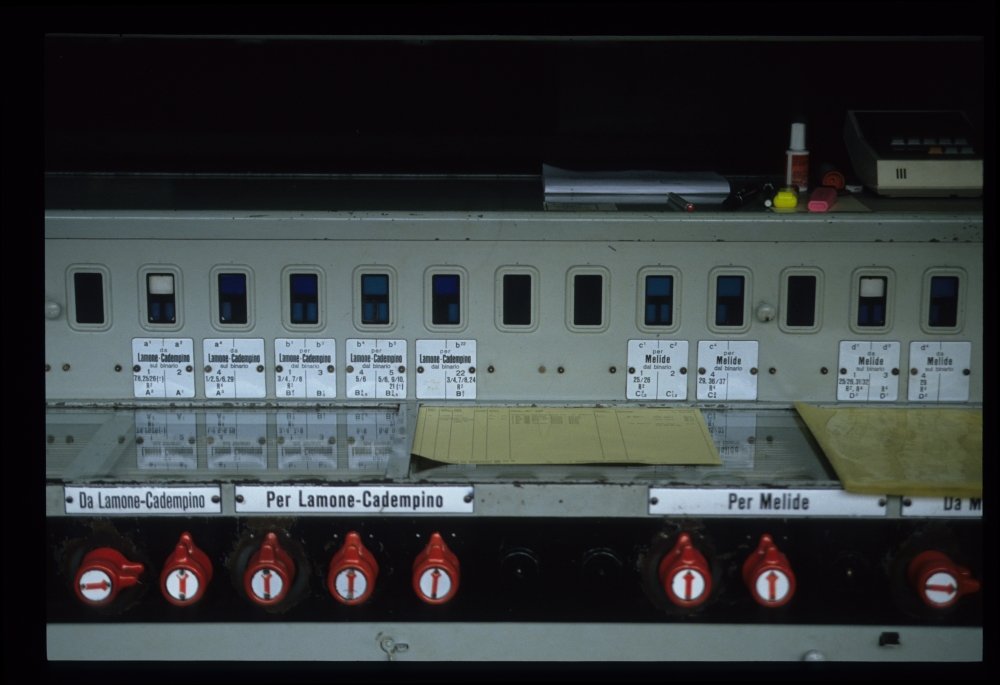
Here are the route switches, on the left for the line to Lamone-Cadempino, on the right for routes from and to Melide:

Interlocking frame, Lugano, 20.8.1988

And finally, here is a picture of the large station building:

Station, Lugano, 20.8.1988

Monday, September 26, 2016

Switzerland 1988: Läufelfingen and somewhere else

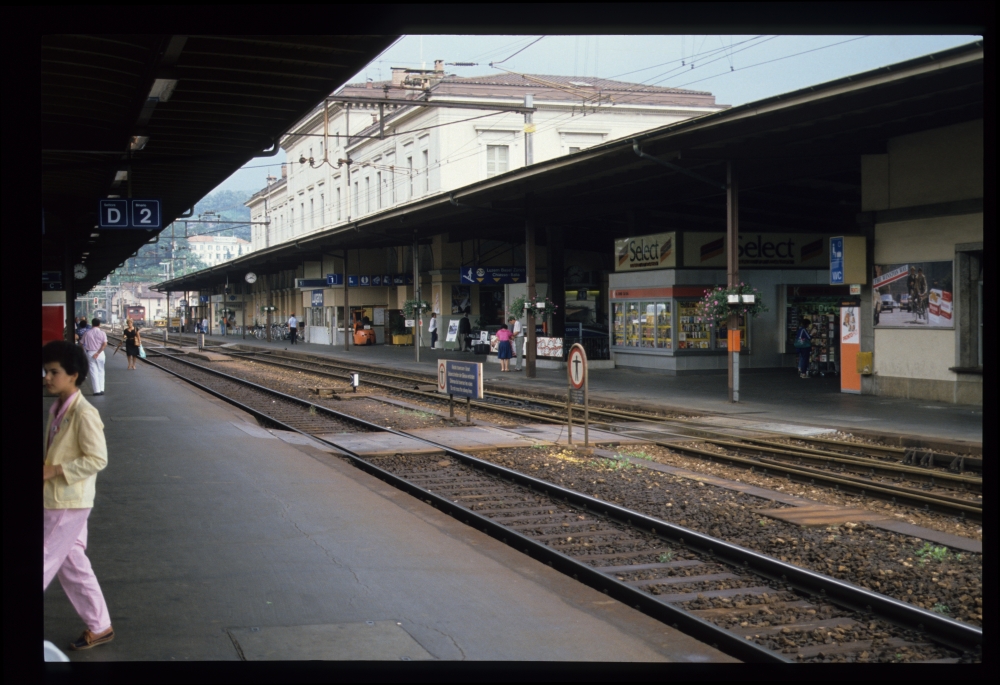
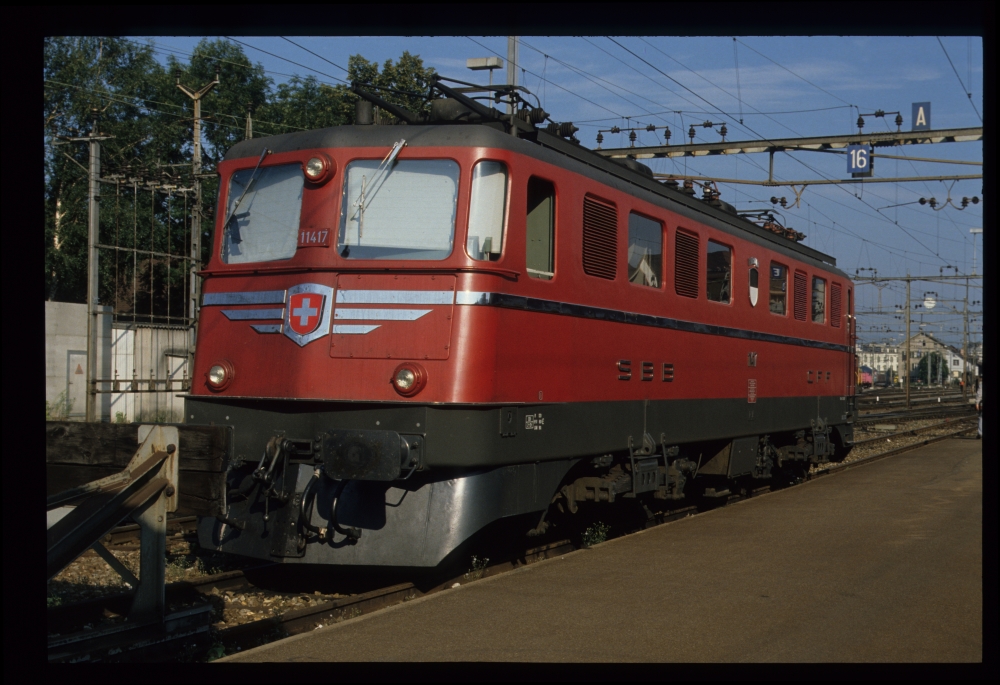
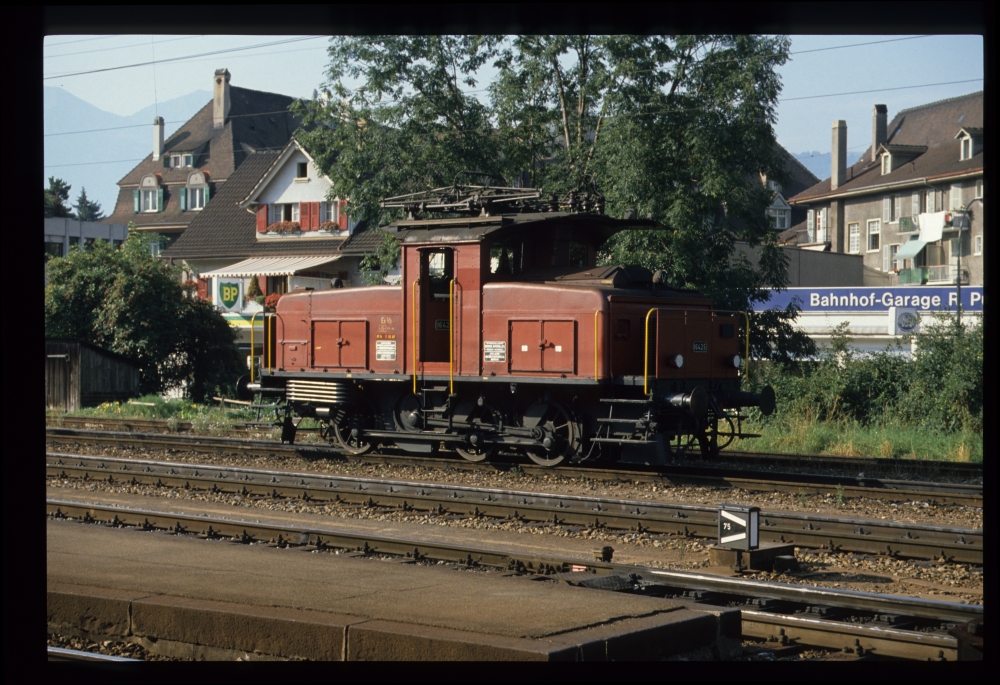
Two photos of SBB locomotives, taken at some unknown location:

SBB Ae 6/6 11417, 19.8.1988

SBB Ee 3/3 16425, 19.8.1988

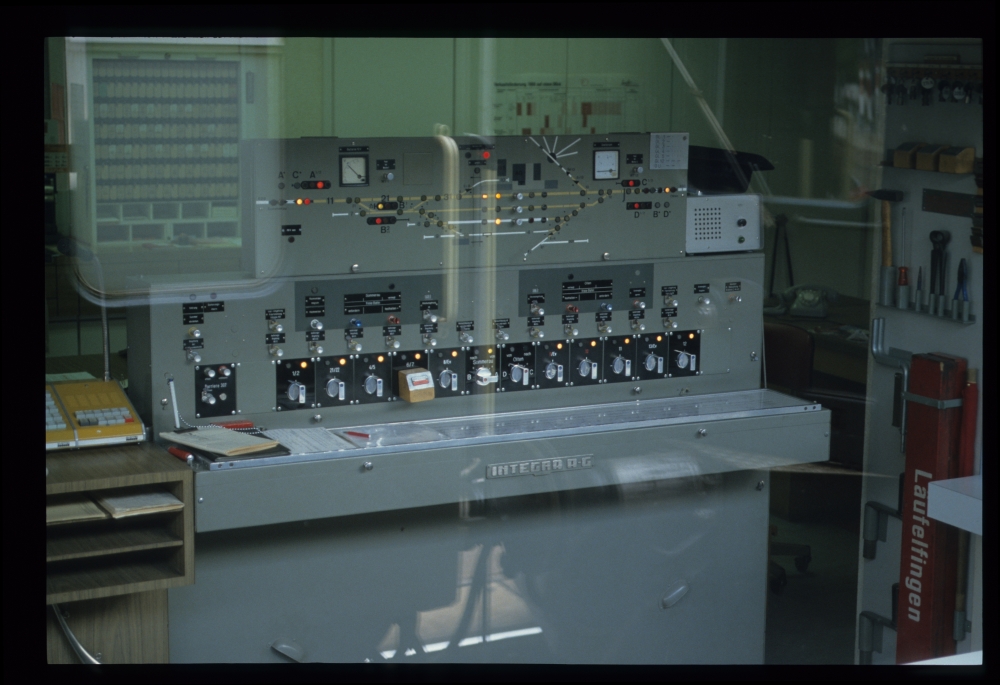
From the train, I aimed at the Integra frame at Läufelfingen:

Integra frame, Läufelfingen, 19.8.1988

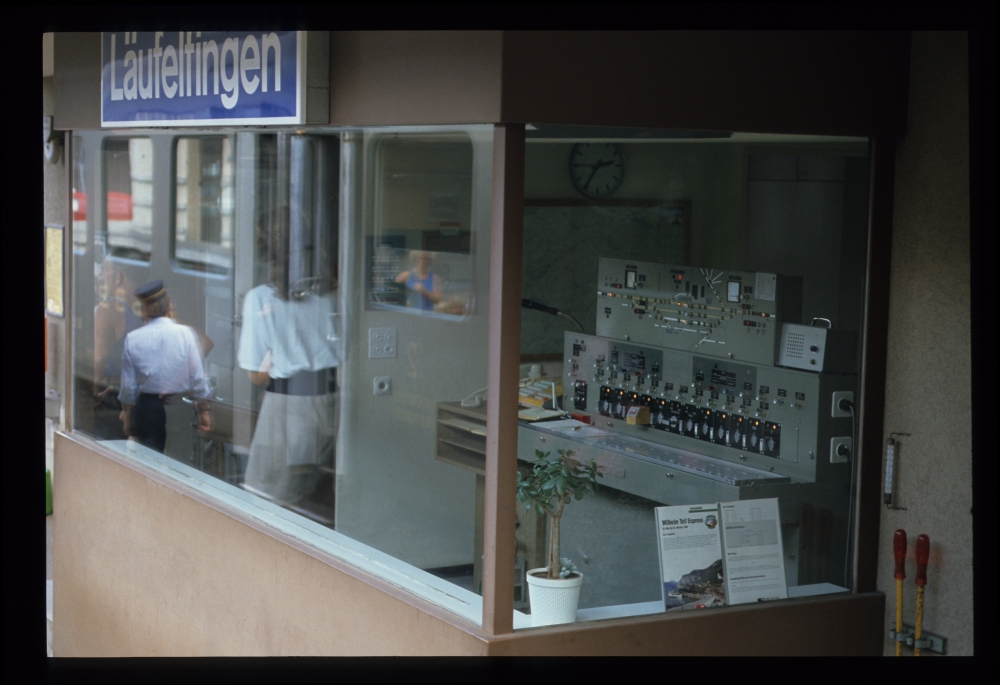
Signal box, Läufelfingen, 19.8.1988

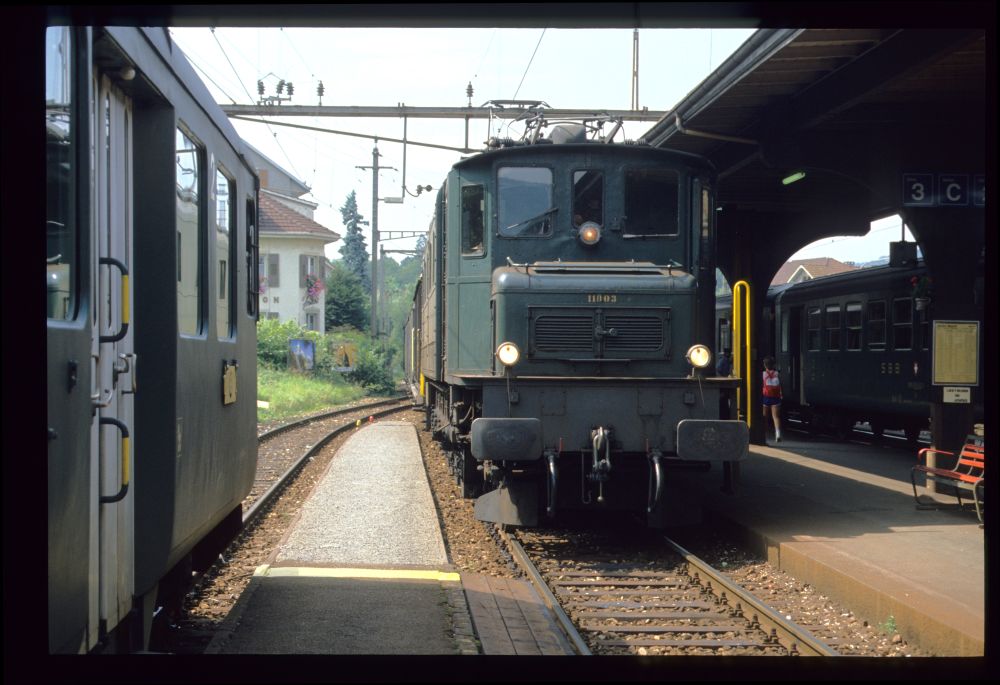
Somewhere—probably at Sissach—, I met this Ae 4/7.

Hanspeter Thöni found an interesting detail in this image: At the points, the fouling point is not at the same location where the track circuits end. Therefore, two markers were used: The yellow one marks the track circuit and is used for trains, the red one is the marker for the actual fouling point. A similar distinction was made in Austria with the so-called "small" and "large" fouling point markers.

Ae 4/7 11003, Sissach?, 19.8.1988

Friday, September 23, 2016

Switzerland 1988: Semaphores at Kiesen

Deutsche Version dieses Postings

Update 25.3.2020: I stumbled over a wonderful Youtube video, which shows the frame in action before the modifications of 1988, with all the noises and sounds of such a signalbox.

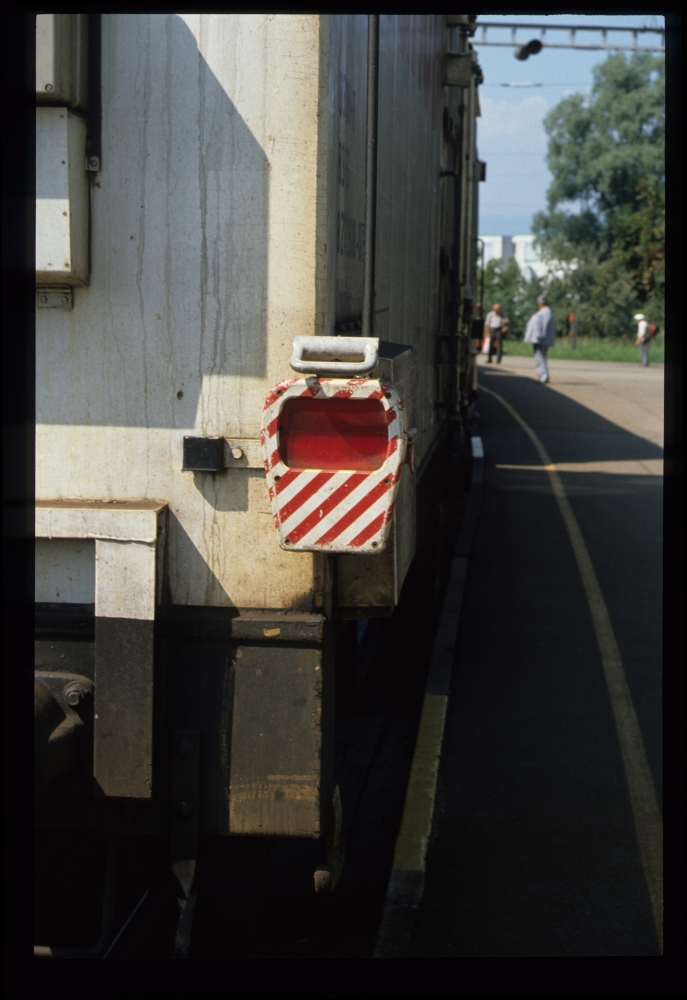
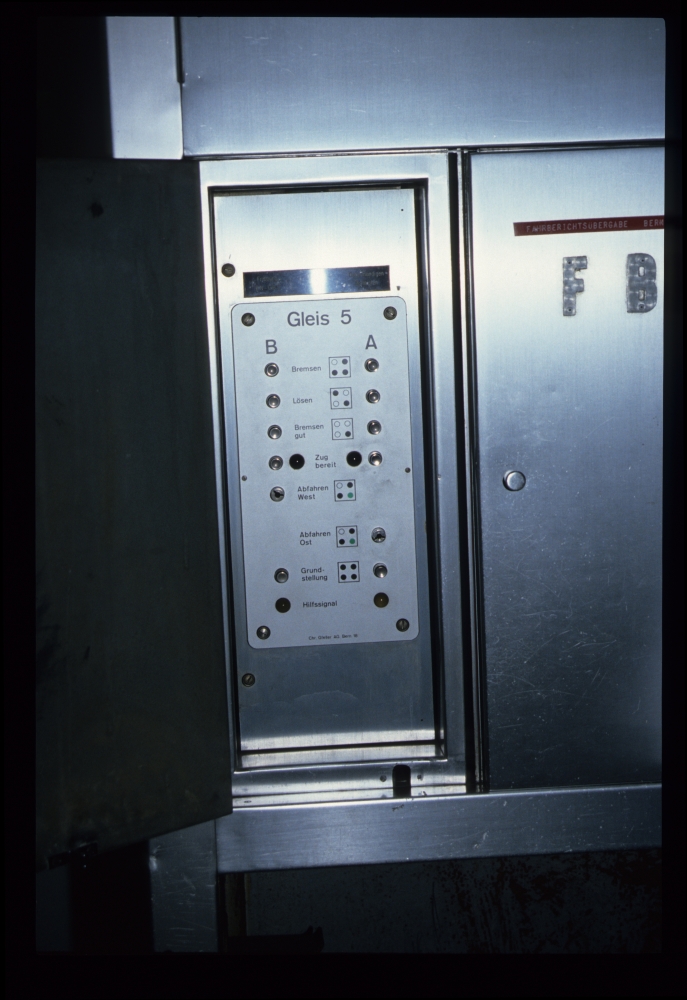
From Kerzers I continued to Kiesen, where I had seen a semaphore on the previous day. Here are three photos taken somewhere on the ride to Kiesen:

Rear end lamp, Switzerland, 18.8.1988

Panel for brake test and "right away" signals, Switzerland, 18.8.1988

Bells, Switzerland, 18.8.1988

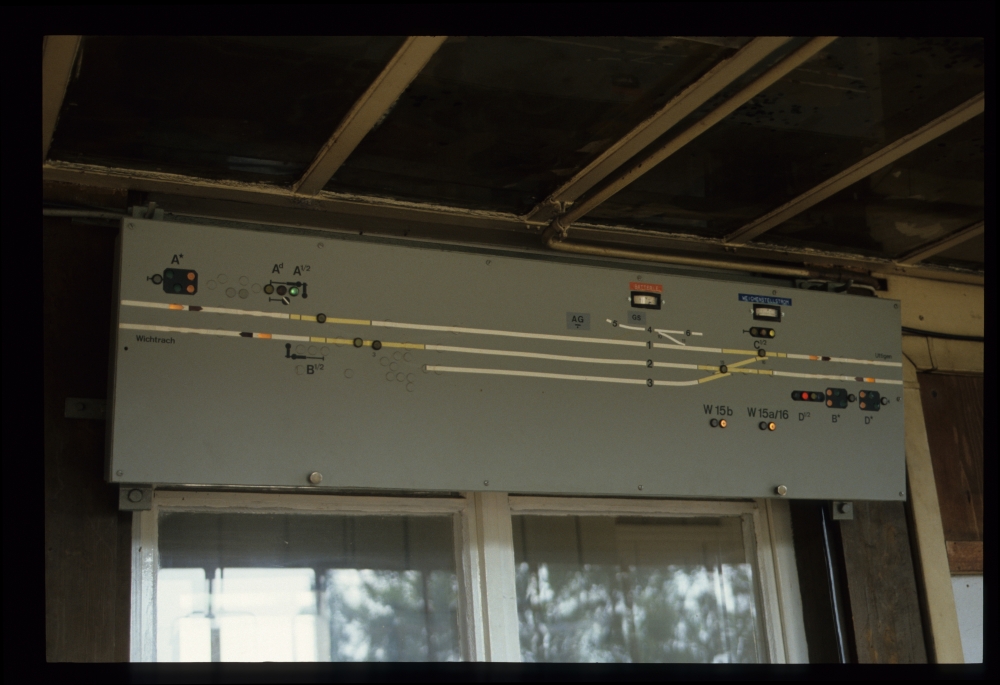
Kiesen had, in 1988, still all the signals of a small intermediate station—two home signals and two group starting signals—, but half of the track connections had been dismantled a short time earlier, as can be seen on the track panel—here with signals cleared for a southward train:

Track and signal panel, Kiesen, 18.8.1988

Here is a track diagram of this small station. Like St.Blaise, it had been reduced from a station with a loop track to a block post with a storage track:


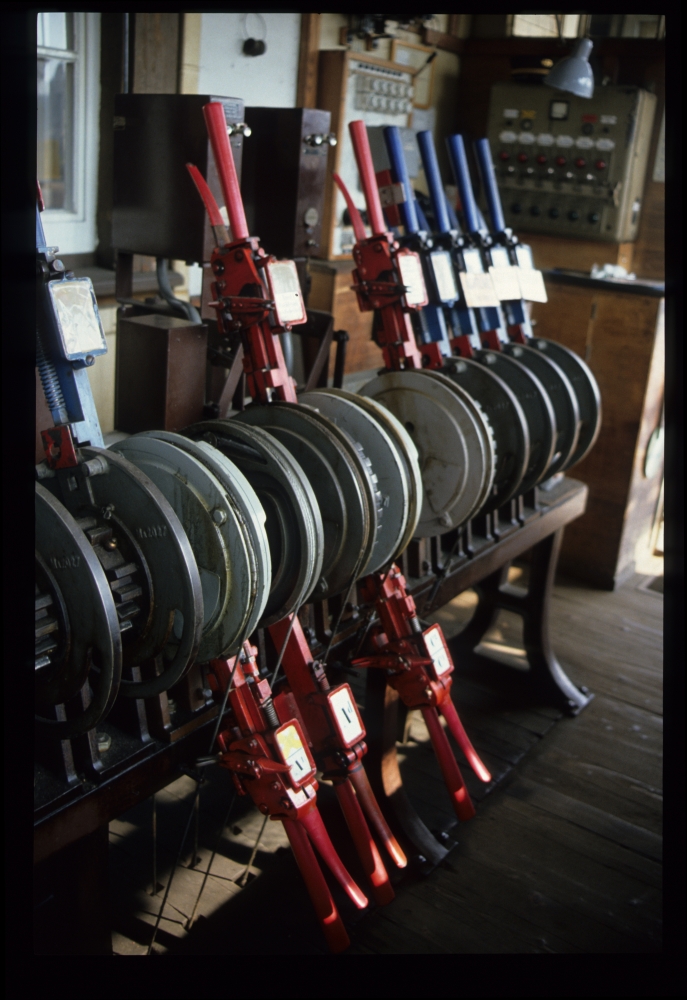
The lever frame at Kiesen still had all the levers—but of course, the levers for the removed points were no longer connected. There were five signal levers on this frame, namely
  • the lever for home signal A1/2, a semaphore, which also controlled the corresponding distant light signal A*,
  • the lever for distant signal ("Durchfahrsignal") Ad, a disc signal, for starting light signal C1/2,
  • the lever for starting signal B1/2, a semaphore, as well as corresponding light distant signal B* mounted on home signal D,
  • the lever for starting signal C1/2, a light signal,
  • and finally the lever for home signal D1/2 and corresponding distant signal D*, both light signals.
Lever frame, Kiesen, 18.8.1988

On the handles of the disconnected points levers (which had moved their points with rodding), small blocks prevented that they could still be pulled:

Disconnected points levers for rodding, Kiesen, 18.8.1988

This handle lock, made by Integra, locks the signal lever C on the right, which is reversed and hence invisible here:

Signal lever for semaphore B1/2 and handle lock for signal C, Kiesen, 18.8.1988

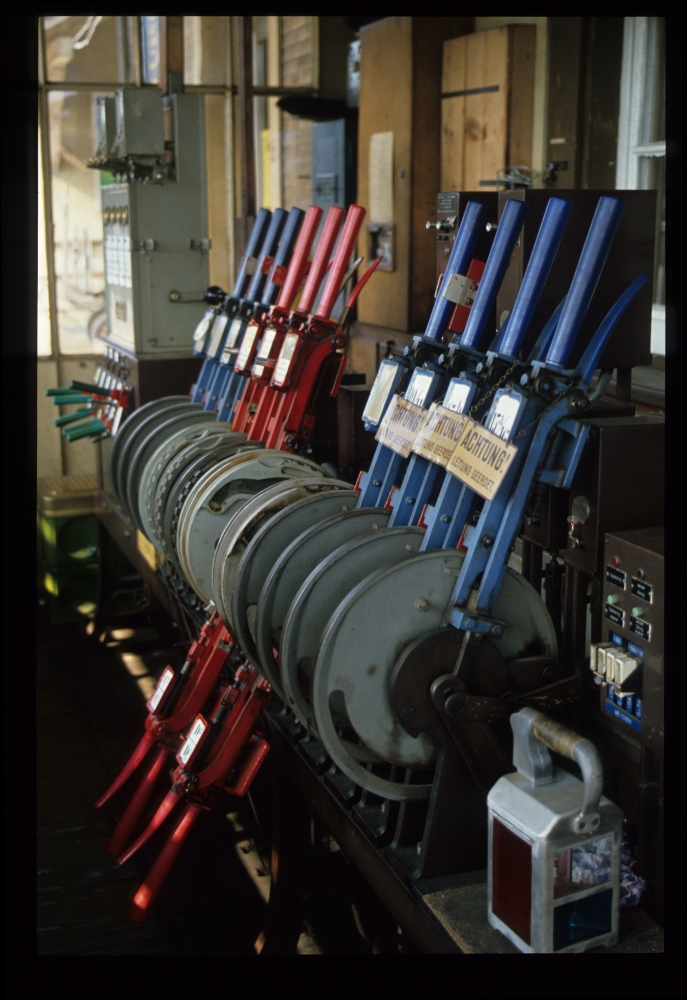
Here one can see the three reversed signal levers for the train route shown in the first picture above:

Levers set for a through train, Kiesen, 18.8.1988

Levers set for a through train, Kiesen, 18.8.1988

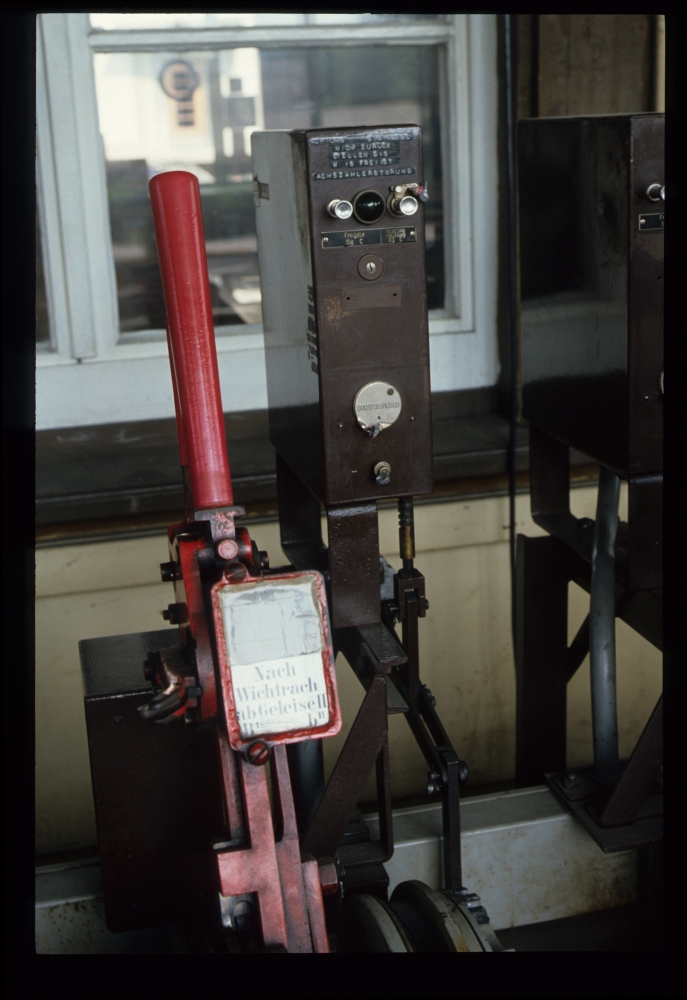
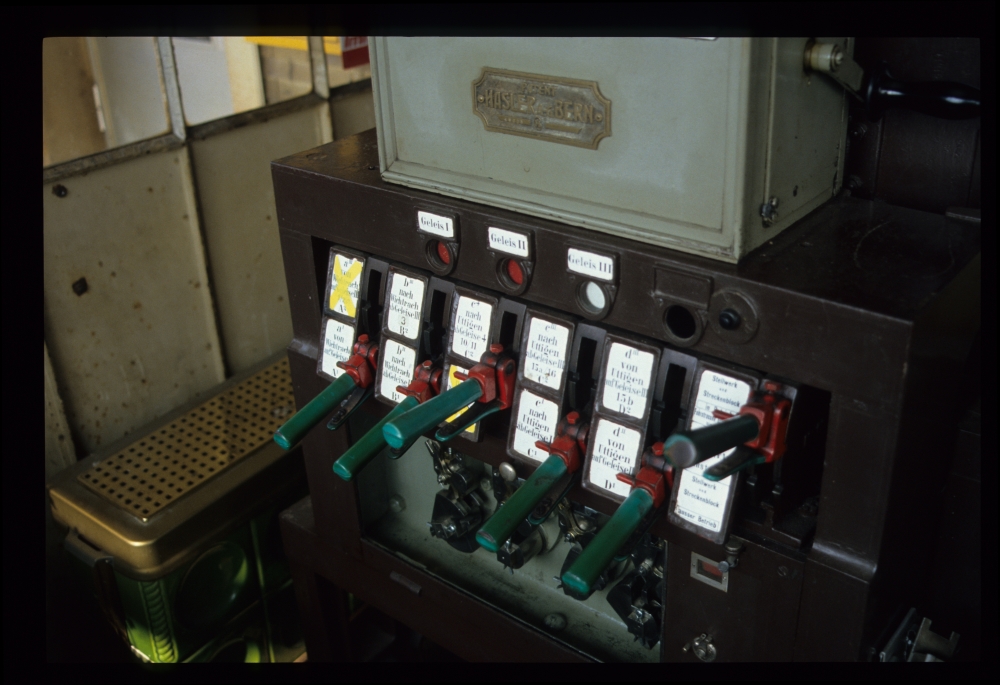
And here are the six route levers—five of them are moved from their central position. From left to right, the levers are as follows:
  • The first one for route "aI from Wichtrach into track I" is reversed downwards.
  • Also the second one, for a route "bII to Wichtrach out of track II", has been moved down (the upper position "bIII to Wichtrach from track III" should have been covered, as the corresponding points were already missing).
  • The third lever, allowing a route out of the shed track "c4 to Uttigen from 4", is in its central position.
  • The fourth lever is reversed for the route "cI to Uttigen from track I", its other position is for route "cIII to Uttigen from track III" out of the former loop and now stub track.
  • The fifth lever for "dII from Uttigen into track II" is also reversed; its other position is for the route "dIII from Uttigen into track III".
  • Finally, this frame, like the one at St.Blaise, also had a "switch-out lever" to switch the station out of the line block. Here, this lever is of course moved upwards into position "Stellwerk und Streckenblock in Betrieb", i.e., "signal box and line block operational":
Route levers, Kiesen, 18.8.1988

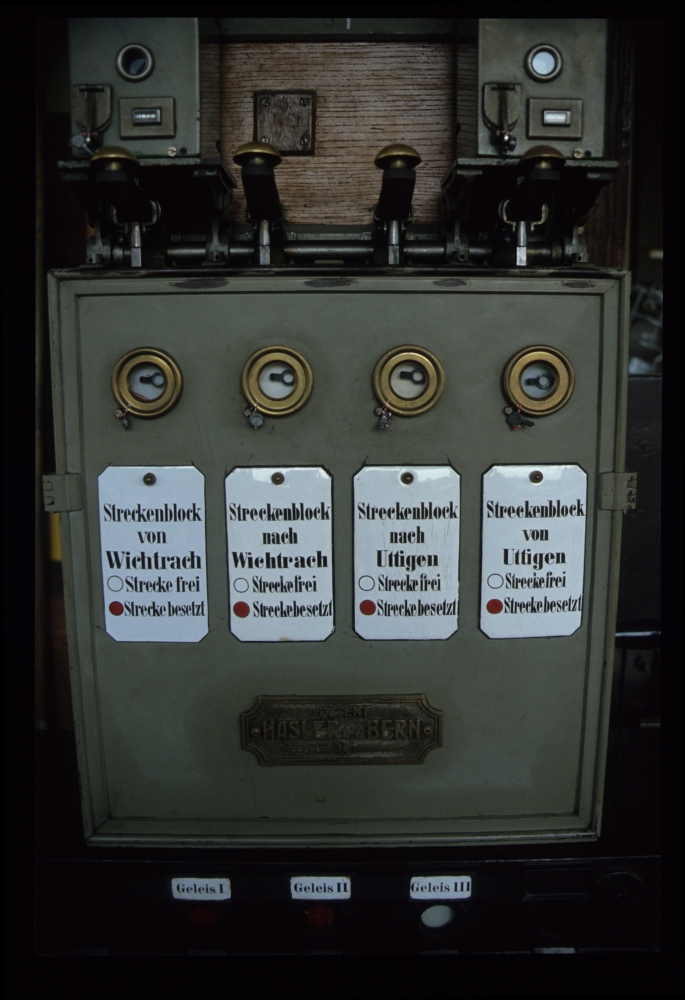
The line block still used four Siemens block instruments. Here, all of them show white disks, i.e., all tracks from and to Kiesen were unoccupied:

Line block instruments, Kiesen, 18.8.1988

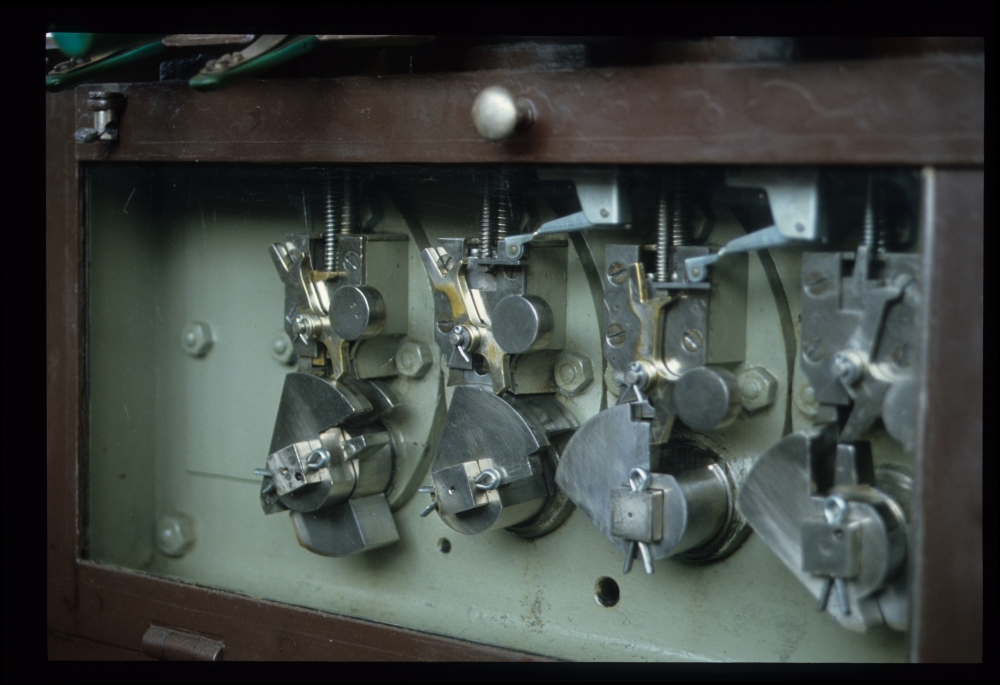
Below the line block case, these locks provided the logic to connect the signal levers with the block instruments:

Block locks, Kiesen, 18.8.1988

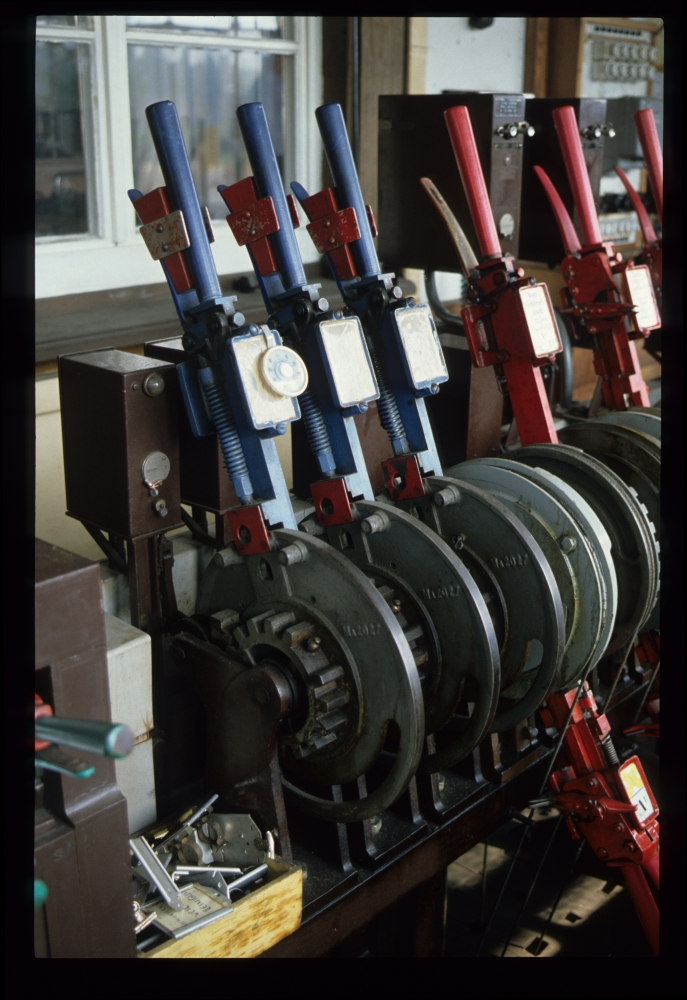
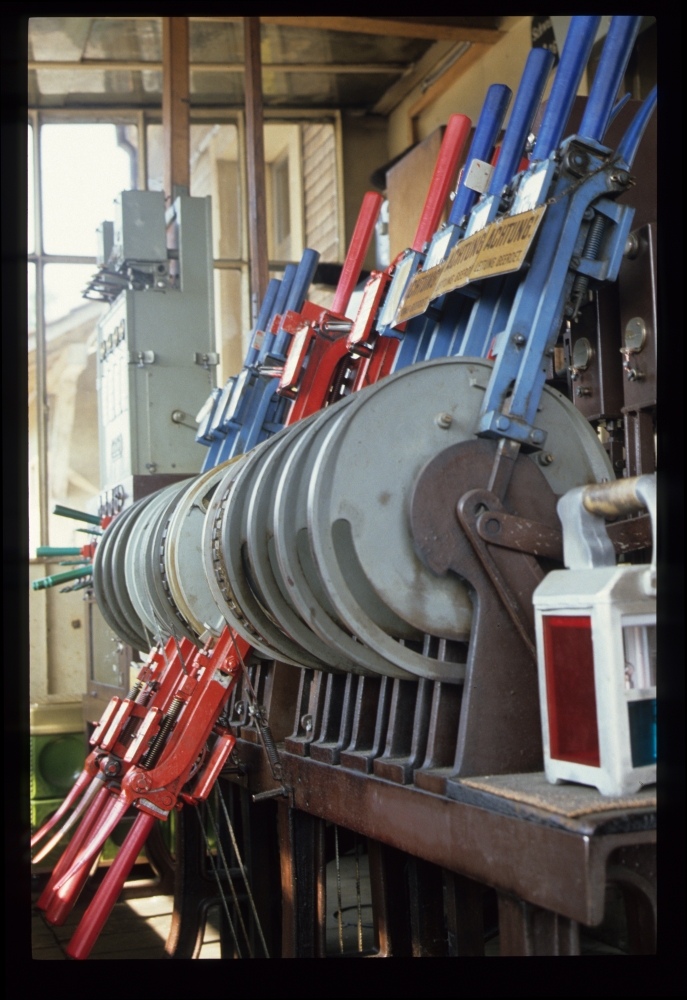
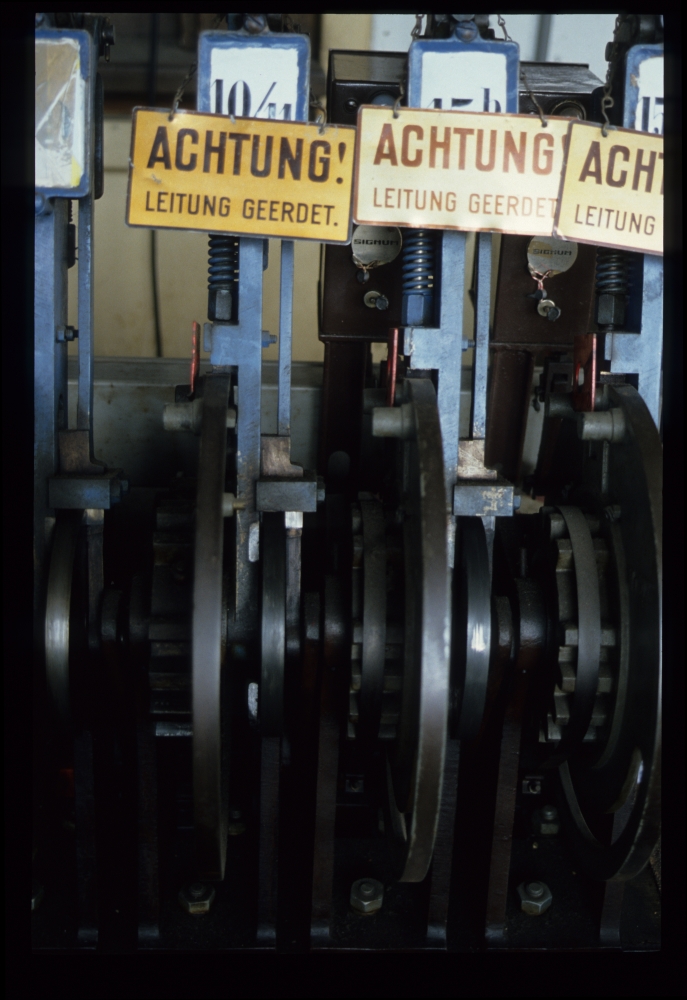
Points 15 and 16 had already been provided with electrical points machines, the corresponding levers were therefore wound with brake bands over the cog wheels formerly moving the rodding. The leftmost lever for connected points 10 and 11, however, was still connected to its points via rodding. The signs on the levers say "Attention: Catenary grounded.", in other words: Don't reverse them and send a locomotive with pantograph in, as this will create a colossal short-circuit on entering:

Points levers, Kiesen, 18.8.1988

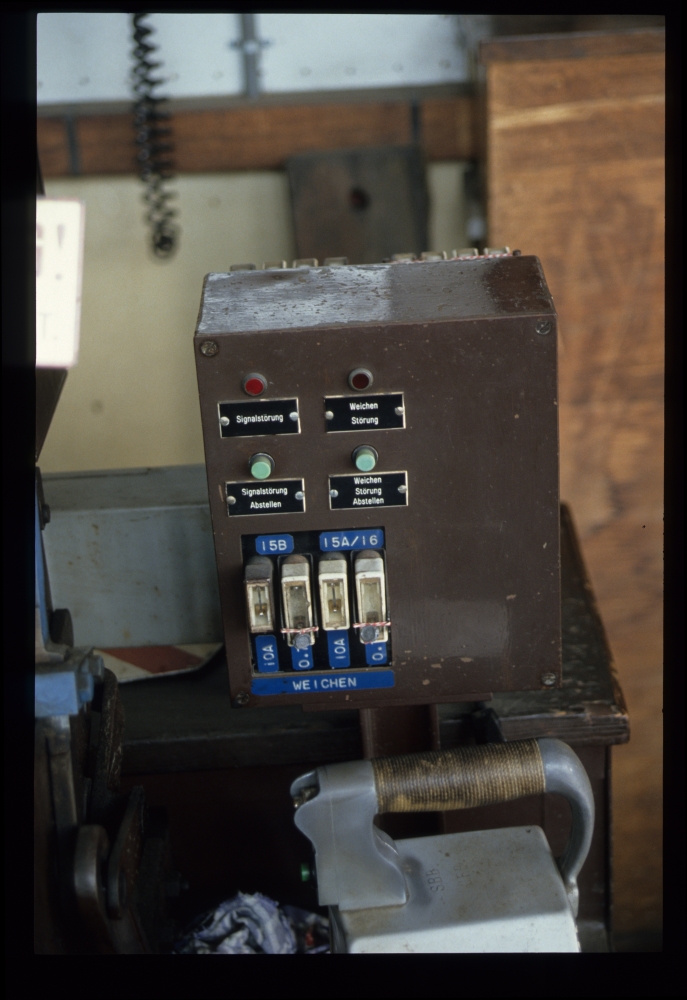
The electrical points had a few fuses both for the motor current and the monitoring circuits:

Points indicators and fuses, Kiesen, 18.8.1988

Right outside were these electro-mechanical bells for announcing trains along the line:

Bells, Kiesen, 18.8.1988

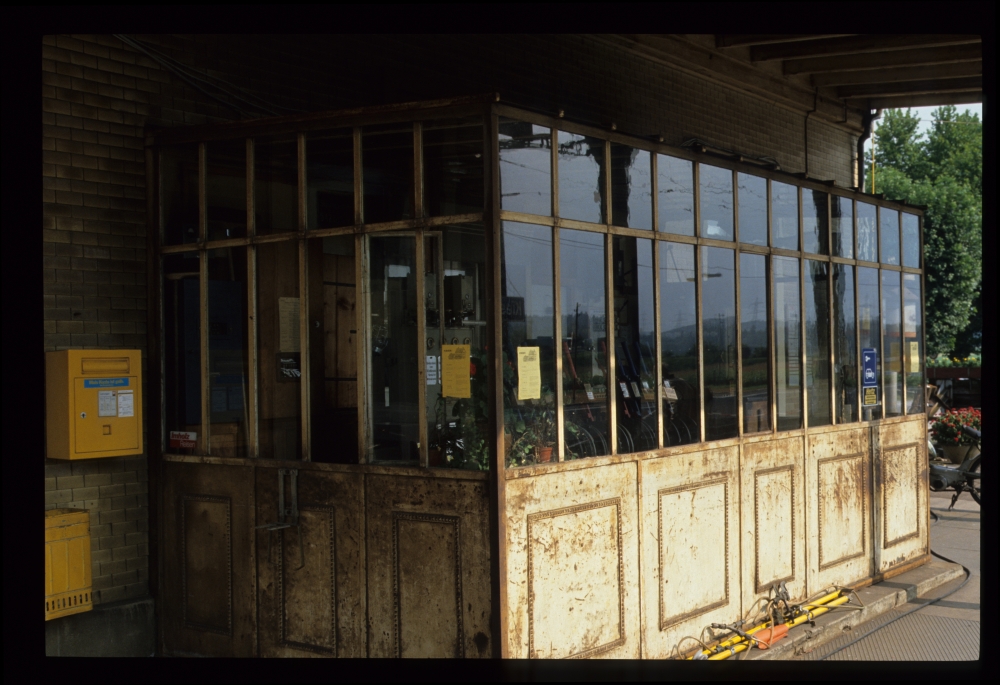
Here is the small shed that housed the frame. The building with single glass sheets was probably horribly cold during winter:

Signal box, Kiesen, 18.8.1988

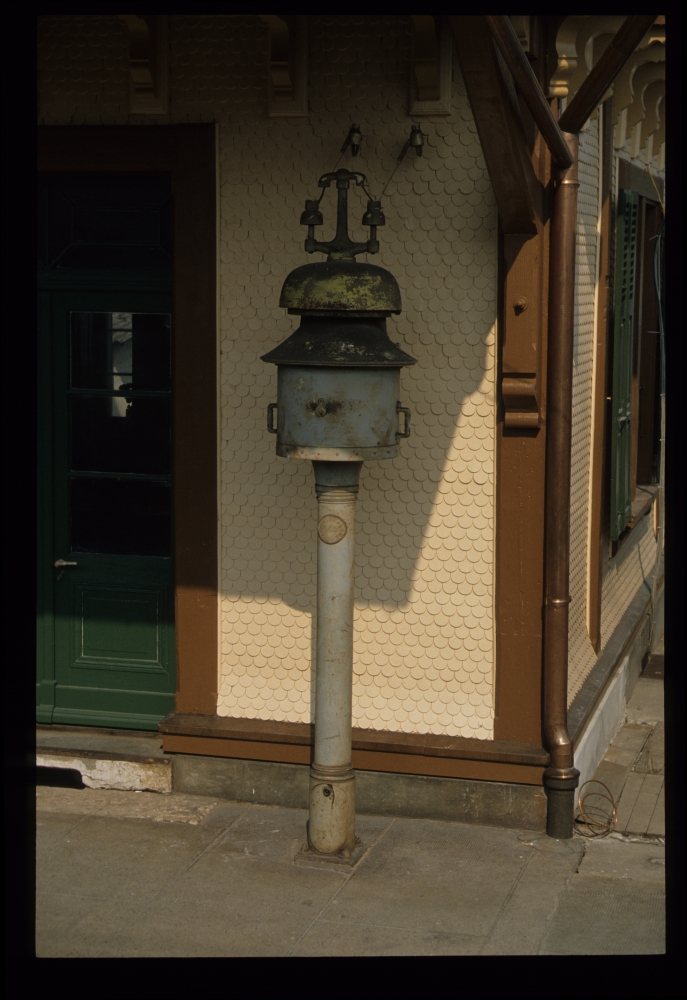
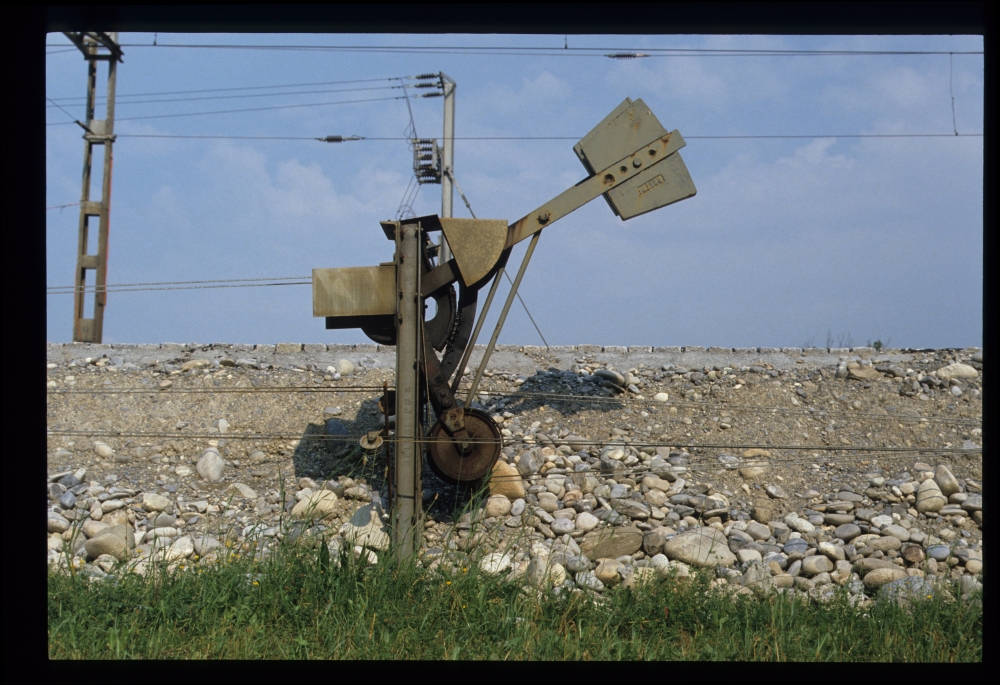
From the station building, I went out to starting signal B1/2. On my way, I passed the wire tensioner for home signal A1/2:

Wire tensioner, Kiesen, 18.8.1988

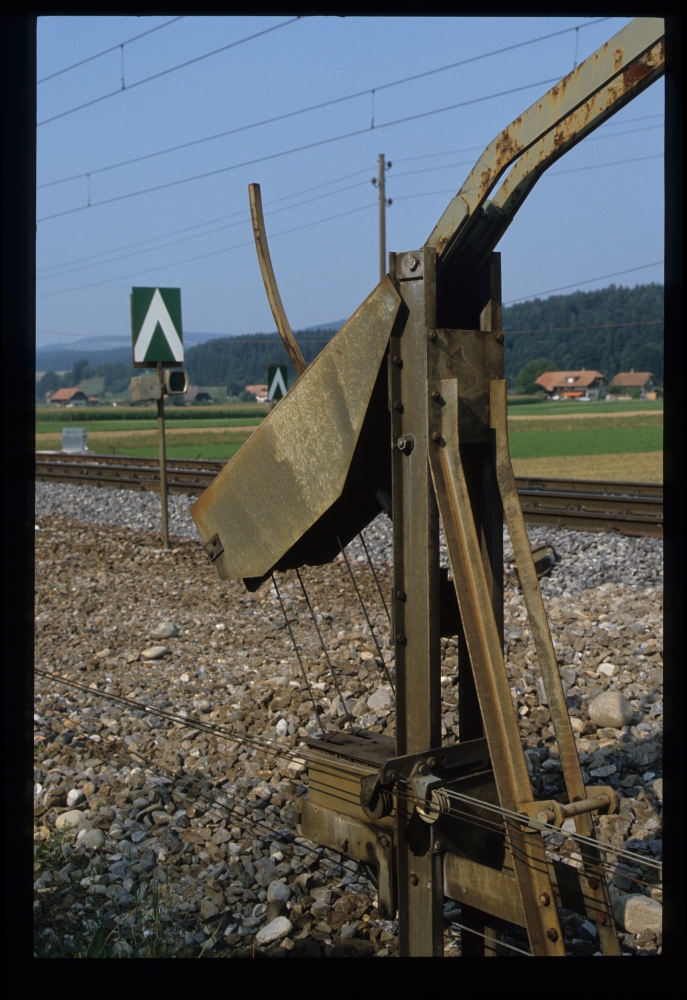
A little further, I took a picture of the wire tensioner for the starting signal:

Wire tensioner, Kiesen, 18.8.1988

And here is a train:

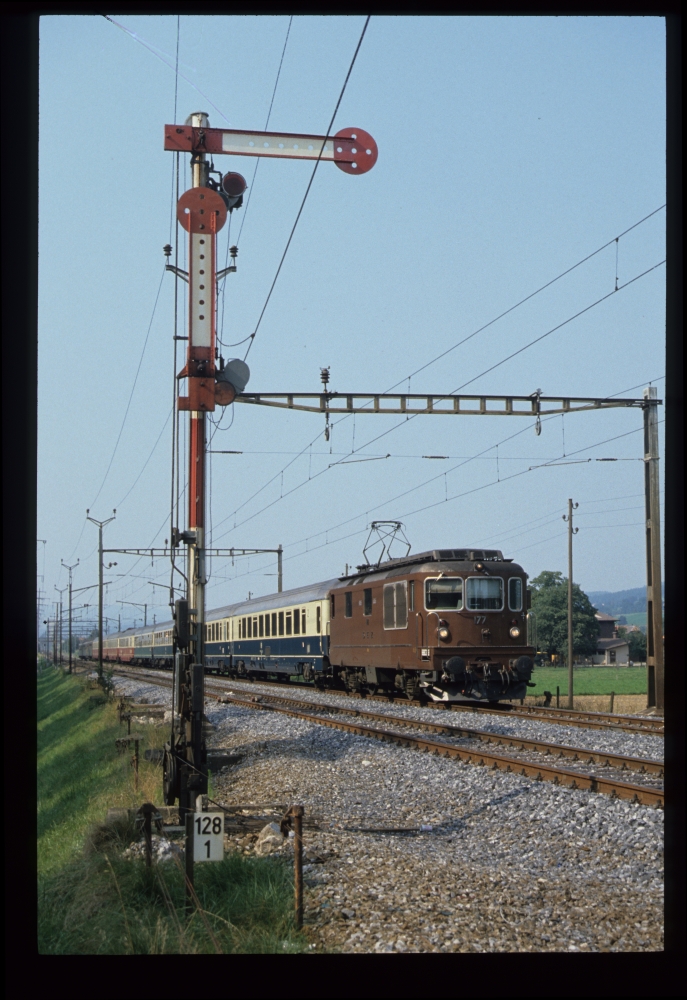
BLS Re 4/4 171, starting signal B1/2, Kiesen, 18.8.1988

After I returned, I took a picture of the station building:

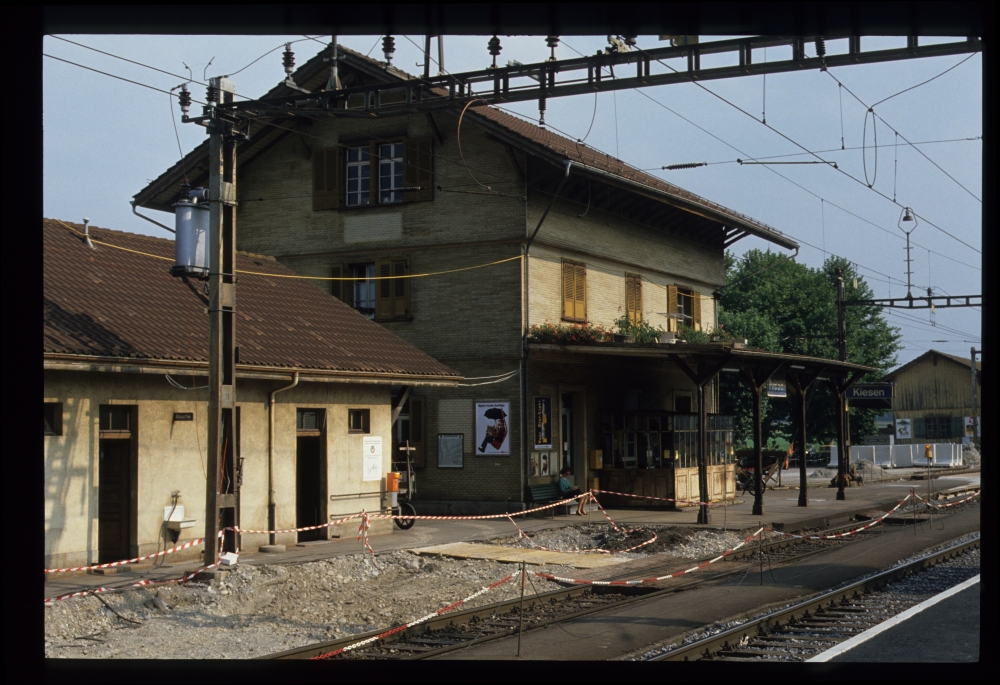
Station building, Kiesen, 18.8.1988

Just before leaving, I took a shot of the signalman returning a signal lever:

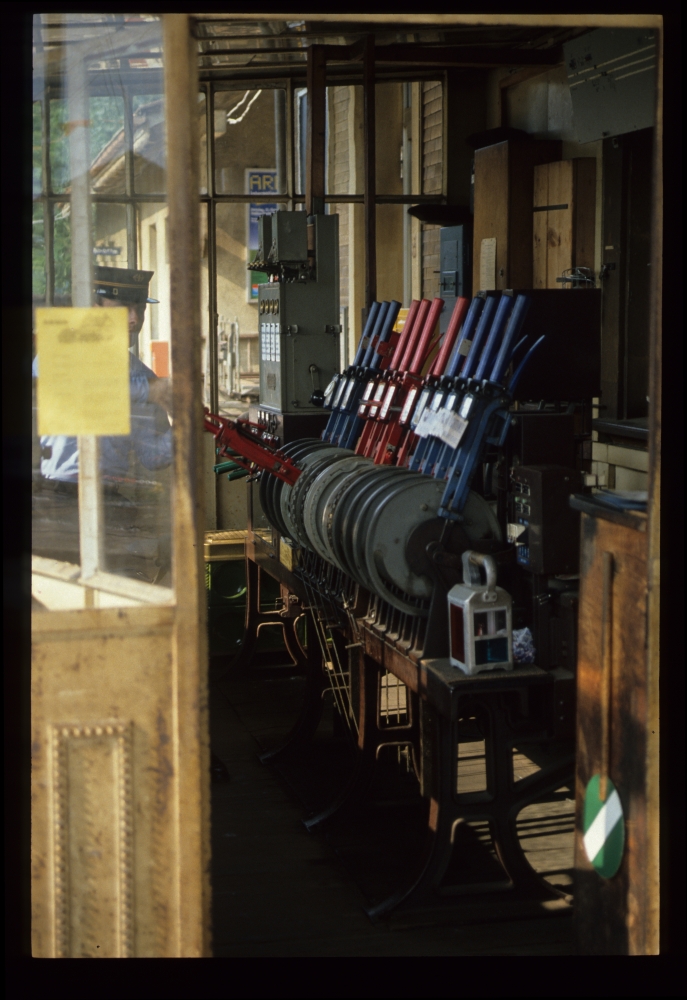
Clearing a signal, Kiesen, 18.8.1988

Finally, I got a picture of a goods train rumbling through. An enlargement would show that all five signal levers had been reversed at that time—there was quite some traffic on that line in this summer:

SBB Ae 6/6 11502, Kiesen, 18.8.1988